
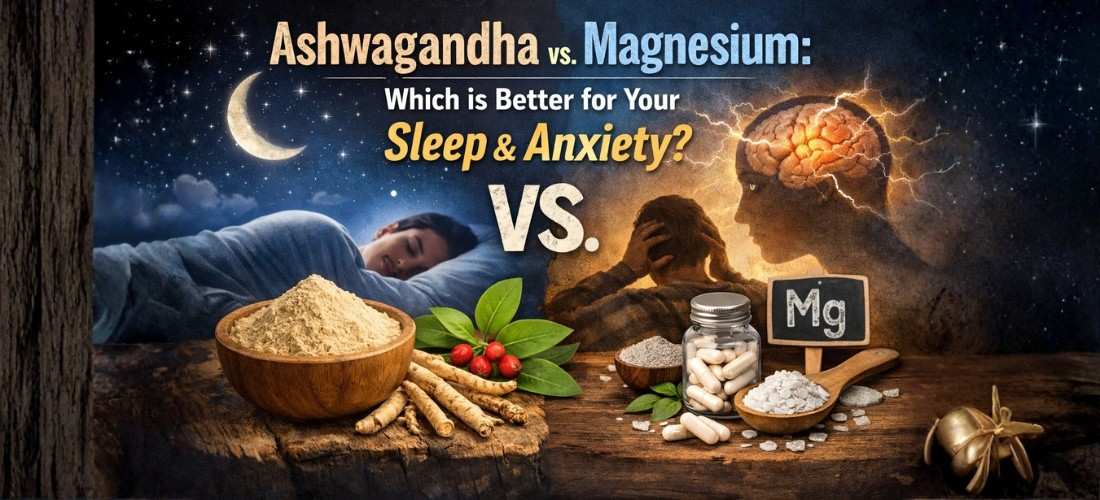
When it comes to stress, sleepless nights, and anxiety, many people turn to natural supplements for relief. Two of the most talked-about options are ashwagandha vs magnesium — but which one is actually better for helping you relax, unwind, and get a good night’s sleep?
Both ashwagandha and magnesium are popular for their calming properties, but they work in very different ways. In this article, we’ll compare ashwagandha vs magnesium for sleep and anxiety, look at how they work, their benefits, possible side effects, and how to choose the right one for you.
- What Is Ashwagandha? An Ancient Adaptogen Root
- What Is Magnesium?
- Ashwagandha vs Magnesium: How They Compare
- Who Should Use Ashwagandha vs Magnesium?
- Can You Take Ashwagandha and Magnesium Together?
- Potential Side Effects & Safety
- How to Use Them for Best Results
- Lifestyle Tips That Help Sleep & Anxiety Too
- Final Verdict: Ashwagandha vs Magnesium
- Key Takeaways
What Is Ashwagandha? An Ancient Adaptogen Root
Ashwagandha is a traditional herb used in Ayurvedic medicine for thousands of years. It’s classified as an adaptogen, meaning it helps your body manage stress and maintain balance.
How Ashwagandha Works
- Helps reduce the body’s stress response
- May lower cortisol (stress hormone) levels
- Supports calmness and emotional balance
Many studies show that ashwagandha can reduce anxiety and improve stress markers in people with chronic stress and anxiety — making it a top contender in the ashwagandha vs magnesium comparison. It may also help improve sleep quality by calming the nervous system and reducing stress before bedtime.
What Is Magnesium?
A Essential Mineral for the Nervous System
Magnesium is a mineral your body needs for more than 300 biochemical processes. It plays a big role in nerve transmission, muscle relaxation, and hormonal balance — all of which affect sleep and anxiety.
How Magnesium Works
- Supports GABA receptors (a calming neurotransmitter)
- Promotes muscle and nervous system relaxation
- Helps regulate sleep-related hormones
Magnesium is often recommended for people who have trouble falling asleep or staying asleep, and for those dealing with physical symptoms of stress such as muscle tension or restlessness.
Ashwagandha vs Magnesium: How They Compare
To understand ashwagandha vs magnesium, let’s break down how they affect sleep and anxiety.
Anxiety Relief
- Ashwagandha: This herbal adaptogen is known for reducing anxiety levels by influencing the stress response system and lowering cortisol. Many clinical studies support its effectiveness for generalized anxiety and stress.
- Magnesium: This mineral helps calm the nervous system and relax muscles. It’s especially helpful if anxiety shows up as physical tension or jitteriness.
Verdict: Ashwagandha tends to be more effective when emotional stress and chronic anxiety are the main problems, while magnesium is better for physical symptoms of stress.
Sleep Support
| Feature | Ashwagandha | Magnesium |
|---|---|---|
| Helps you fall asleep | Moderate | Good |
| Improves sleep quality | Good | Strong |
| Immediate effect | No (takes time) | Yes (within days) |
| Best for stress-related insomnia | Yes | Yes |
- Ashwagandha may improve sleep by reducing stress and calming the mind. However, it usually takes days to weeks of consistent use to show benefits.
- Magnesium may work faster for sleep support, especially if you struggle with muscle tension, restless legs, or frequent waking. Magnesium helps relax both mind and body, making it easier to drift off.
Verdict: Magnesium generally provides more direct sleep support, while ashwagandha helps indirectly by calming the stress response.
Who Should Use Ashwagandha vs Magnesium?
Best for Anxiety
- Ashwagandha: Best if your anxiety feels emotional — excessive worry, racing thoughts, persistent stress.
- Magnesium: Best if anxiety feels physical — tense muscles, nervous tension, restless energy.
Best for Sleep
- Ashwagandha: Great if your sleep issues stem from stress and overthinking.
- Magnesium: Excellent if you have difficulty falling asleep, restless nights, or muscle tension.
When to Choose Magnesium
- You notice tight muscles or restless legs at night
- You want faster relief for sleep issues
- You prefer a mineral your body needs for daily metabolic functions
When to Choose Ashwagandha
- Your anxiety is long-term or connected to stress
- You want holistic support for emotional balance
- You’re okay with results taking some time
Can You Take Ashwagandha and Magnesium Together?
Yes — combining ashwagandha vs magnesium isn’t a competition. In fact, many people use both together to target stress and sleep from multiple angles. Because they work differently, they can complement each other:
- Ashwagandha addresses the stress response
- Magnesium supports muscle relaxation and nervous system calm
Before combining, it’s wise to check dosage and timing with a healthcare provider, especially if you are on medication, pregnant, breastfeeding, or have existing medical conditions.
Potential Side Effects & Safety
Ashwagandha
Possible mild side effects:
- Upset stomach
- Headache
- Drowsiness
Rare but serious issues have been reported in sensitive individuals, especially at high doses. Avoid if you have autoimmune conditions or thyroid disorders without professional guidance.
Magnesium
Possible mild side effects:
- Diarrhea
- Stomach cramps
- Nausea
These usually occur with high doses. Choosing bioavailable forms like magnesium glycinate or magnesium citrate can reduce side effects.
💡 Tip: Always start with the lower end of the recommended dosage and adjust gradually.
How to Use Them for Best Results
Ashwagandha
- Typical dose: 300–600 mg daily
- Best with food
- Best taken consistently for several weeks
Magnesium
- Typical dose: 200–400 mg daily
- Best taken in the evening
- Magnesium glycinate often preferred for sleep support
Always choose high-quality supplements and check ingredient purity.
Lifestyle Tips That Help Sleep & Anxiety Too
While comparing ashwagandha vs magnesium is helpful, your habits matter too. Consider these:
1. Morning Light & Movement
Exposure to daylight and gentle exercise regulate your sleep-wake cycle.
2. Evening Wind-Down Routine
Dim lights, avoid screens, and calm activities signal your body it’s time to sleep.
3. Balanced Diet
Magnesium-rich foods: almonds, spinach, pumpkin seeds
Anti-stress foods: turmeric, chamomile, warm herbal tea
These lifestyle factors work alongside supplements to support better sleep and reduced anxiety.
Final Verdict: Ashwagandha vs Magnesium
- For anxiety: Ashwagandha often wins for emotional stress and cortisol reduction.
- For sleep: Magnesium usually offers more immediate, measurable benefits.
- For holistic support: Using both together (when appropriate) can provide broader relief.
At the end of the day, the best choice depends on your symptoms, health goals, and how your body responds.
Key Takeaways
- Ashwagandha and magnesium help anxiety and sleep differently.
- Magnesium works quickly for sleep and muscle calm.
- Ashwagandha supports long-term stress balance.
- Combining them can be effective — with medical approval.