
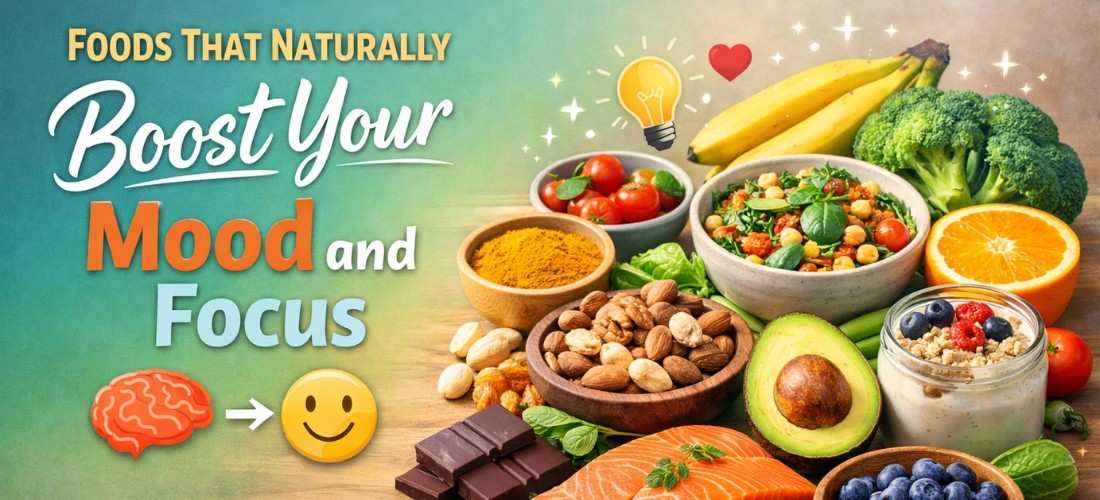
What you eat has a direct impact on how you feel, think, and concentrate throughout the day. Including the right foods that boost mood and focus in your daily diet can help improve mental clarity, emotional balance, and overall productivity—without relying on stimulants.
In fact, your brain depends on nutrients from food to create neurotransmitters like serotonin, dopamine, and norepinephrine. When your diet lacks these nutrients, symptoms like brain fog, irritability, and low motivation often appear. This guide explores the most effective foods that boost mood and focus and how to use them in everyday life.
- Why Nutrition Plays a Key Role in Mood and Focus
- Top Foods That Boost Mood and Focus
- Foods That Improve Emotional Well-Being
- Gut-Friendly Foods That Boost Mood and Focus
- Foods That Harm Mood and Focus
- How to Build a Mood-Boosting Diet
- Lifestyle Habits That Enhance Food Benefits
- Final Thoughts
- Frequently Asked Questions (FAQs)
- 1. What are the best foods that boost mood and focus naturally?
- 2. How do foods that boost mood and focus work?
- 3. Can diet really improve focus and concentration?
- 4. Which foods improve mood and reduce anxiety?
- 5. Are there foods that help both mood and focus at the same time?
- 6. How long does it take for mood-boosting foods to work?
- 7. Can gut health affect mood and focus?
- 8. What foods should I avoid to maintain good focus?
- 9. Can foods replace supplements for mood and focus?
- 10. How often should I eat mood-boosting foods?
Why Nutrition Plays a Key Role in Mood and Focus
Your brain is one of the most energy-demanding organs in your body. Poor nutrition disrupts chemical balance, leading to low mood and poor attention span.
How Food Supports Brain Function
- Regulates neurotransmitter production
- Maintains stable blood sugar levels
- Reduces inflammation linked to depression and anxiety
Choosing whole, nutrient-dense foods that boost mood and focus helps your brain function at its best.
Top Foods That Boost Mood and Focus
Fatty Fish for Cognitive Strength
Fatty fish are rich in omega-3 fatty acids, which are essential for brain cell structure.
Key Benefits:
- Improves memory and concentration
- Supports emotional well-being
- Reduces mental fatigue
Regular intake makes fatty fish one of the most powerful foods that boost mood and focus.
Eggs for Mental Energy
Eggs contain choline, B vitamins, and protein—all crucial for brain health.
Why Eggs Matter:
- Enhance learning and memory
- Support neurotransmitter activity
- Improve mental processing speed
Eggs are an affordable and effective brain-supporting food.
Nuts and Seeds for Stress Control
Nuts and seeds provide magnesium, zinc, and healthy fats that support nerve function.
Mental Health Benefits:
- Reduce anxiety symptoms
- Improve attention span
- Support relaxation
Magnesium-rich foods are especially important for emotional balance.
Foods That Improve Emotional Well-Being
Dark Chocolate for Mood Enhancement
Dark chocolate contains flavonoids that increase blood flow to the brain.
How It Helps:
- Boosts serotonin and dopamine
- Enhances alertness
- Improves mood naturally
Choose dark chocolate with at least 70% cocoa for best results.
Bananas for Brain Stability
Bananas are rich in vitamin B6, which helps create feel-good neurotransmitters.
Benefits:
- Reduces irritability
- Maintains steady energy
- Supports emotional balance
They are convenient foods that boost mood and focus for busy lifestyles.
Berries for Mental Sharpness
Berries are loaded with antioxidants that protect brain cells.
Why They’re Important:
- Improve memory retention
- Support focus and learning
- Reduce brain inflammation
Adding berries regularly enhances long-term cognitive health.
Gut-Friendly Foods That Boost Mood and Focus
Fermented Foods and the Gut-Brain Connection
Your gut produces most of your serotonin, making gut health essential for mood.
How Gut Health Helps:
- Improves emotional regulation
- Enhances concentration
- Reduces stress levels
Including gut-supporting foods strengthens the mind-body connection.
Foods That Harm Mood and Focus
Highly Processed Foods
Highly processed foods disrupt brain chemistry and energy balance.
Negative Effects:
- Increase brain fog
- Cause mood swings
- Reduce concentration
Replacing them with whole foods that boost mood and focus improves mental clarity.
Excess Sugar and Refined Carbs
High sugar intake leads to energy crashes and irritability.
Impact on the Brain:
- Reduces attention span
- Worsens anxiety
- Disrupts sleep quality
Moderation is essential for sustained focus.
How to Build a Mood-Boosting Diet
Breakfast Ideas
- Eggs with leafy greens
- Yogurt with berries and seeds
Lunch Options
- Fatty fish with vegetables
- Whole grains with nuts
Healthy Snacks
- Dark chocolate (small portion)
- Fruits and nuts
Consistency with foods that boost mood and focus is more important than perfection.
Lifestyle Habits That Enhance Food Benefits
Stay Hydrated
Dehydration can impair memory and attention.
Prioritize Sleep
Sleep improves nutrient absorption and brain recovery.
Manage Stress
Mindfulness and exercise amplify the benefits of a healthy diet.
Final Thoughts
Eating the right foods that boost mood and focus is one of the simplest and most natural ways to support mental health. Instead of quick fixes, focus on nourishing your brain with whole, balanced meals.
Small dietary changes can lead to noticeable improvements in how you feel, think, and perform every day.
Frequently Asked Questions (FAQs)
1. What are the best foods that boost mood and focus naturally?
The best foods that boost mood and focus include fatty fish, eggs, nuts, seeds, berries, bananas, leafy greens, dark chocolate, and fermented foods. These foods provide essential nutrients like omega-3 fatty acids, magnesium, B vitamins, and antioxidants that support brain health.
2. How do foods that boost mood and focus work?
Foods that boost mood and focus work by supporting neurotransmitters such as serotonin and dopamine, stabilizing blood sugar levels, reducing brain inflammation, and improving blood flow to the brain. This helps enhance concentration, emotional balance, and mental clarity.
3. Can diet really improve focus and concentration?
Yes, diet plays a major role in brain function. Eating nutrient-dense foods that boost mood and focus helps maintain steady energy levels, improves memory, and reduces mental fatigue. Poor nutrition often leads to brain fog and low productivity.
4. Which foods improve mood and reduce anxiety?
Foods rich in magnesium, omega-3s, and antioxidants—such as nuts, seeds, fatty fish, leafy greens, and berries—are known to improve mood and reduce anxiety. These are some of the most effective foods that boost mood and focus naturally.
5. Are there foods that help both mood and focus at the same time?
Yes, several foods help with both mood and focus simultaneously. Eggs, fatty fish, berries, bananas, and dark chocolate are excellent foods that boost mood and focus because they support neurotransmitter production and brain energy.
6. How long does it take for mood-boosting foods to work?
Some benefits, like improved energy and focus, can be noticed within days. Long-term mood improvements usually take a few weeks of consistently eating foods that boost mood and focus, along with healthy lifestyle habits.
7. Can gut health affect mood and focus?
Absolutely. The gut produces most of the body’s serotonin. Eating gut-friendly foods that boost mood and focus, such as fermented foods and fiber-rich vegetables, supports emotional well-being and cognitive performance.
8. What foods should I avoid to maintain good focus?
Highly processed foods, excessive sugar, and refined carbohydrates can negatively impact mood and concentration. Replacing them with whole foods that boost mood and focus helps maintain mental clarity and emotional stability.
9. Can foods replace supplements for mood and focus?
In many cases, yes. A balanced diet rich in foods that boost mood and focus can provide all the necessary nutrients for brain health. Supplements may be useful only when dietary intake is insufficient.
10. How often should I eat mood-boosting foods?
For best results, include foods that boost mood and focus in every meal—breakfast, lunch, and snacks. Consistency is key for long-term mental and emotional benefits.