
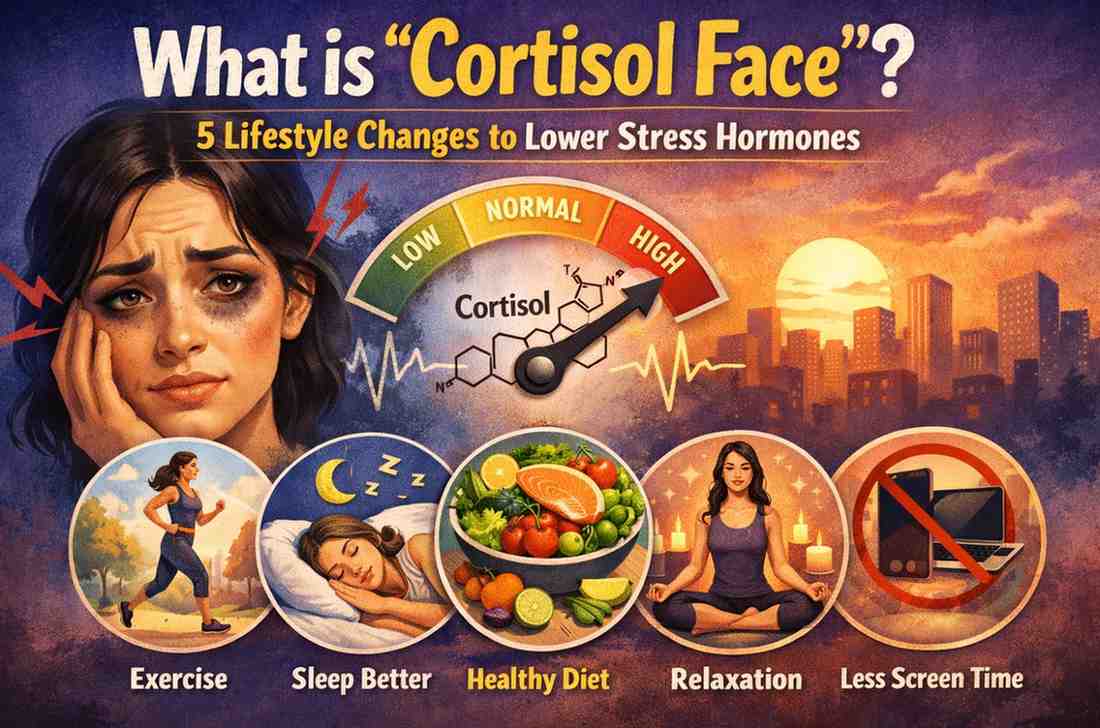
Have you noticed puffiness, facial weight gain, dull skin, or breakouts despite eating well and exercising? The cause might not be your diet—it could be cortisol face. This term has gained attention as more people realize how chronic stress affects both appearance and overall health.
In this article, we’ll explain what cortisol face is, how stress hormones change your facial features, and five proven lifestyle changes to lower cortisol naturally.
- What Is Cortisol Face?
- How Cortisol Affects Your Face
- Who Is Most at Risk of Cortisol Face?
- 5 Lifestyle Changes to Lower Stress Hormones Naturally
- How Long Does It Take to Reverse Cortisol Face?
- Common Mistakes That Worsen Cortisol Face
- Can Supplements Help Cortisol Face?
- Final Thoughts
What Is Cortisol Face?
Understanding Cortisol Face
Cortisol face refers to facial changes caused by prolonged elevation of cortisol, the body’s primary stress hormone. While cortisol is essential for survival, consistently high levels can lead to visible changes in the face and body.
Common signs of cortisol face include:
- Facial puffiness or swelling
- Weight gain around cheeks and jaw
- Acne or dull skin
- Increased facial redness
- Tired or inflamed appearance
Unlike normal weight gain, cortisol face often appears even when calorie intake hasn’t increased.
How Cortisol Affects Your Face
The Role of Stress Hormones
Cortisol helps regulate blood sugar, inflammation, and metabolism. However, chronic stress keeps cortisol elevated for long periods.
Effects of High Cortisol on the Face
- Promotes fat storage in the face
- Causes fluid retention
- Triggers inflammation
- Breaks down collagen and elastin
This hormonal imbalance explains why cortisol face often appears alongside fatigue, anxiety, and poor sleep.
Who Is Most at Risk of Cortisol Face?
Lifestyle and Health Factors
You’re more likely to develop cortisol face if you experience:
- Chronic stress or anxiety
- Poor sleep quality
- Overtraining or excessive exercise
- Extreme dieting or under-eating
- High caffeine intake
Stress doesn’t need to be emotional—physical stress on the body also raises cortisol levels.
5 Lifestyle Changes to Lower Stress Hormones Naturally
1. Improve Sleep Quality
Why Sleep Matters for Cortisol Face
Lack of sleep is one of the fastest ways to raise cortisol levels.
What to Do:
- Aim for 7–9 hours of sleep
- Sleep before midnight when possible
- Avoid screens 1 hour before bed
Better sleep helps regulate cortisol, reduce inflammation, and gradually improve cortisol face.
2. Eat Balanced, Anti-Stress Meals
Nutrition’s Role in Cortisol Control
Skipping meals or following extreme diets can spike cortisol.
Focus on:
- Adequate protein at every meal
- Healthy fats to stabilize hormones
- Complex carbohydrates to regulate blood sugar
Consistent nourishment signals safety to the body, helping reduce cortisol face over time.
3. Reduce High-Intensity Exercise
When Exercise Becomes a Stressor
Exercise is healthy—but too much intense training can raise cortisol.
Better Options:
- Walking
- Yoga or Pilates
- Light strength training
Balancing movement allows cortisol levels to normalize, supporting recovery from cortisol face.
4. Practice Daily Stress-Reduction Techniques
Calming the Nervous System
Chronic mental stress keeps cortisol elevated even at rest.
Effective Techniques:
- Deep breathing
- Meditation
- Journaling
- Spending time in nature
Even 10 minutes a day can lower stress hormones and improve signs of cortisol face.
5. Limit Caffeine and Stimulants
Hidden Cortisol Triggers
Excess caffeine stimulates cortisol release, especially on an empty stomach.
Smart Adjustments:
- Avoid caffeine first thing in the morning
- Limit intake to 1–2 cups daily
- Replace with herbal teas when possible
Reducing stimulants helps the body exit fight-or-flight mode and recover from cortisol face.
How Long Does It Take to Reverse Cortisol Face?
What to Expect
Lowering cortisol is a gradual process. Most people notice:
- Reduced facial puffiness within 2–4 weeks
- Improved skin tone within 1–2 months
- Better energy and mood within weeks
Consistency with lifestyle changes is key to reversing cortisol face naturally.
Common Mistakes That Worsen Cortisol Face
Avoid These Habits
- Skipping meals
- Overexercising
- Constant calorie restriction
- Excess caffeine
- Ignoring rest and recovery
These habits signal stress to the body, keeping cortisol elevated.
Can Supplements Help Cortisol Face?
Supportive, Not a Cure
Some supplements may support stress management, but lifestyle changes are the foundation.
Focus first on:
- Sleep
- Nutrition
- Stress reduction
Supplements should complement—not replace—healthy habits when addressing cortisol face.
Final Thoughts
Cortisol face is a visible sign that your body is under prolonged stress. While it can feel frustrating, it’s also a powerful signal to slow down, nourish yourself, and rebalance your lifestyle.
By improving sleep, managing stress, eating balanced meals, and reducing over-stimulation, you can naturally lower cortisol levels and restore a healthier, calmer appearance—inside and out.