
Calculating your Body Mass Index (BMI) at home is a simple way to assess whether your weight is in a healthy range, but many people make common mistakes that can lead to inaccurate results. Understanding how to properly calculate your BMI is essential for making informed decisions about your health and wellness. In this guide, we’ll explore the most frequent errors people make when using a BMI calculator at home and provide tips to help you avoid them for accurate, reliable results.
What is BMI and Why is it Important?
Before diving into common mistakes, it’s essential to understand what BMI is and why it’s a valuable health indicator. BMI is a numerical value calculated based on your weight and height. It is used to categorize individuals into different weight categories—underweight, normal weight, overweight, and obese. While BMI isn’t a perfect measure of health, it serves as a helpful screening tool to identify potential weight-related health issues.
Common Mistakes When Calculating BMI at Home
Incorrect Measurement of Height
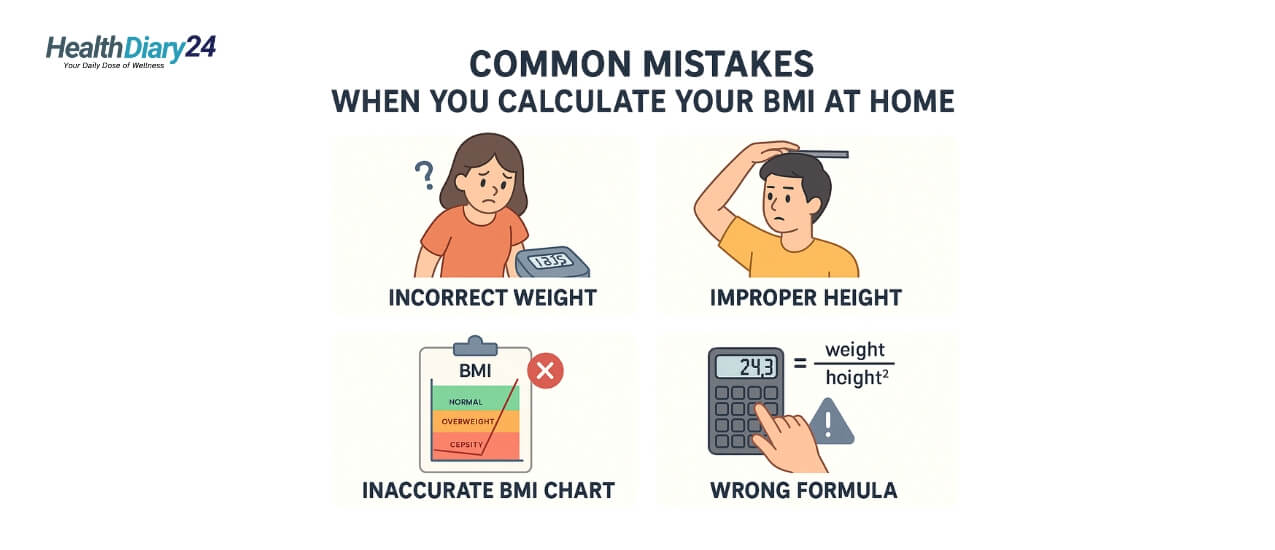
One of the most common mistakes people make when calculating BMI at home is measuring their height incorrectly. Since BMI is highly dependent on your height, even a small error in this measurement can lead to inaccurate results. To avoid this, make sure you’re standing straight against a wall, using a flat surface for your feet, and measuring from the top of your head to your feet using a proper measuring tape or ruler.
Not Using the Correct Units of Measurement
Another common mistake is not using the correct units of measurement for weight and height. BMI calculations are based on weight in kilograms (kg) and height in meters (m). If you’re using pounds and inches, you’ll need to convert these measurements into the proper units. This can be confusing, but there are plenty of online BMI calculators that automatically convert your measurements for you.
Relying Solely on BMI to Assess Health
While BMI is an important tool, relying solely on it can be misleading, especially for athletes or individuals with high muscle mass. BMI doesn’t differentiate between muscle and fat, so someone with a lot of muscle mass may fall into the overweight or obese category even though they’re in excellent physical shape. It’s important to consider other factors like body fat percentage, waist circumference, and overall fitness levels to get a clearer picture of your health.
Forgetting to Account for Pregnancy or Age
Pregnant women and older adults may have a different BMI range than the general population. Pregnancy naturally leads to weight gain, but this is not necessarily a health issue. Similarly, age-related changes in muscle mass and fat distribution can affect BMI calculations. When calculating BMI, it’s important to consider these factors and adjust your expectations accordingly. For pregnant women, consult with a healthcare provider for a more accurate assessment.
Inaccurate Weight Measurement
Another common mistake is measuring your weight inaccurately. It’s best to weigh yourself at the same time each day, preferably in the morning before eating, and on a consistent scale. Ensure you’re using a digital or reliable analog scale, and remember that fluctuations in water retention, clothing, or time of day can affect the accuracy of your weight measurement.
Not Using a Reputable BMI Calculator
Many online calculators offer BMI results, but not all of them are accurate or reliable. It’s essential to use a reputable calculator, such as those provided by government health organizations or medical institutions. A reliable BMI calculator will not only give you your BMI number but also categorize you according to your weight status and provide suggestions for next steps if needed.
Ignoring Changes Over Time
A single BMI calculation might not tell you much about your health. It’s important to track your BMI over time to understand trends and patterns in your weight. Rapid fluctuations in BMI can signal potential health issues, such as sudden weight loss or weight gain, which may require medical attention. By monitoring your BMI over weeks and months, you can better manage your weight and make informed decisions about your health.
How to Calculate BMI Correctly
To ensure you’re calculating your BMI correctly, follow these simple steps:
- Measure your weight: Weigh yourself in the morning using a reliable scale.
- Measure your height: Stand straight against a wall and measure from the top of your head to your feet.
- Convert your measurements to the correct units: If you use pounds and inches, convert them to kilograms and meters.
- Use an accurate BMI formula: Divide your weight in kilograms by your height in meters squared (BMI = weight (kg) / height (m)²).
Alternatively, use a reputable online calculator to make the process easier and error-free.
Why Avoiding These Mistakes Matters
Ensuring accuracy when calculating your BMI is crucial for obtaining meaningful health insights. An inaccurate reading could lead to unnecessary concern or false reassurance. For instance, if you incorrectly calculate your BMI and assume you’re in the healthy weight range, you might miss out on important health interventions. Similarly, mistakenly categorizing yourself as obese or underweight could lead to unnecessary lifestyle changes or anxiety.
Conclusion
Understanding and calculating your BMI correctly is an essential step in managing your health and wellness. By avoiding the common mistakes outlined above, you can ensure that you’re getting accurate readings that reflect your true health status. While BMI is a helpful tool, it should be considered alongside other measures of health, including body fat percentage, fitness levels, and medical advice. Remember, a holistic approach to health and weight management will yield the best long-term results.