
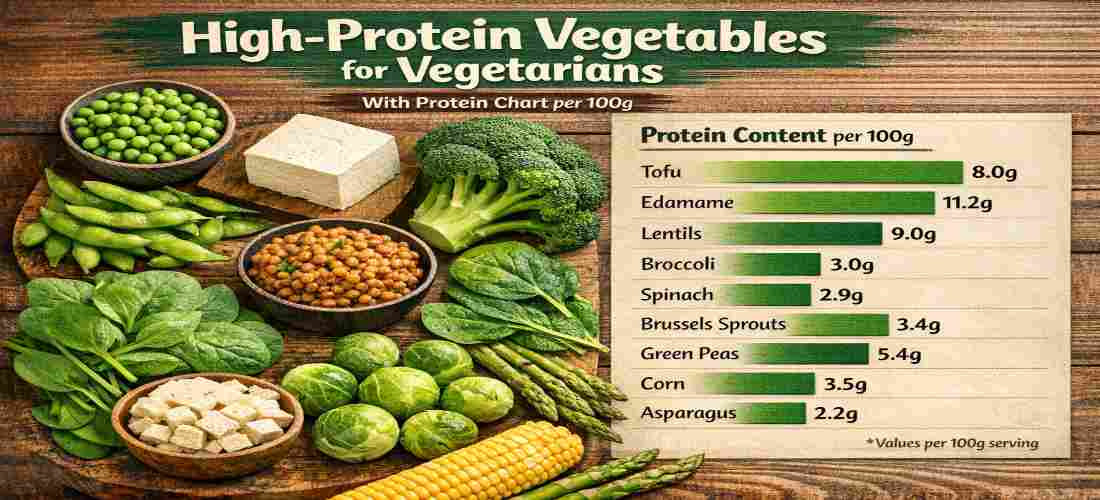
Getting enough protein on a plant-based diet is completely achievable when you choose the right foods. Including high-protein vegetables for vegetarians in your daily meals can support muscle growth, improve recovery, and enhance overall health. While vegetables are not as protein-dense as legumes or tofu, many still offer impressive amounts per 100 grams. This guide includes a detailed protein chart per 100g to help you plan your vegetarian diet effectively.
Why Protein Matters for Vegetarians
Protein is essential for:
- Muscle repair and growth
- Tissue healing
- Hormone production
- Immune support
- Maintaining lean body mass
For active individuals and those aiming for muscle gain, focusing on high-protein vegetables for vegetarians helps meet daily nutritional needs naturally.
High-Protein Vegetables Chart (Per 100g)
Below is a practical protein comparison chart (values approximate and may vary slightly):
| Vegetable | Protein per 100g |
|---|---|
| Green Peas | 5.4g |
| Edamame | 11g |
| Lentils (cooked) | 9g |
| Spinach | 2.9g |
| Broccoli | 2.8g |
| Brussels Sprouts | 3.4g |
| Kale | 2.9g |
| Asparagus | 2.2g |
| Sweet Corn | 3.3g |
| Artichokes | 3.3g |
| Mushrooms | 3.1g |
| Cauliflower | 1.9g |
| Collard Greens | 3g |
| Bok Choy | 1.5g |
| Mustard Greens | 2.7g |
This chart makes it easier to choose the most effective high-protein vegetables for vegetarians based on your dietary goals.
Best High-Protein Vegetables for Muscle Growth
🥇 Edamame
One of the highest protein plant options, great for post-workout recovery.
🥈 Lentils
Rich in protein and fiber, ideal for muscle support and digestion.
🥉 Green Peas
Affordable, versatile, and protein-rich for everyday meals.
Although lentils and edamame are technically legumes, they are commonly included in vegetable-based diets and are excellent for boosting protein intake.
How to Add High-Protein Vegetables to Your Meals
Breakfast
- Spinach smoothie with plant protein
- Vegetable oats bowl
Lunch
- Lentil and vegetable soup
- Broccoli quinoa bowl
Dinner
- Stir-fried edamame and mixed vegetables
- Vegetable curry with whole grains
Using a variety of high-protein vegetables for vegetarians ensures balanced nutrition and better muscle support.
Additional Health Benefits
High-protein vegetables also:
- Improve digestion (high fiber)
- Support heart health
- Reduce inflammation
- Help manage weight
- Strengthen immunity
They provide protein without excess saturated fat or cholesterol.
Daily Protein Requirements
- Sedentary adults: 0.8g per kg body weight
- Active individuals: 1.2–2g per kg body weight
Combining high-protein vegetables for vegetarians with legumes, whole grains, nuts, and seeds helps meet these targets more effectively.
Common Mistakes to Avoid
- Relying on only one protein source
- Not eating enough total calories
- Ignoring strength training
- Skipping post-workout protein intake
Balanced meals and consistency are key for muscle growth.
Final Thoughts
Including high-protein vegetables for vegetarians in your diet is a smart and sustainable way to support muscle growth and overall health. By using the protein chart per 100g, you can plan your meals more effectively and ensure you meet your daily protein requirements. Combine different plant foods, stay consistent with workouts, and focus on variety for the best results.