
Trying to get pregnant can feel overwhelming, especially if you don’t know your fertile window. Using an ovulation calculator for conception is one of the easiest and most effective ways to understand your cycle and improve your chances of pregnancy. By tracking ovulation accurately, you can plan intercourse during your most fertile days and boost your chances of conceiving naturally. In this guide, you’ll learn how ovulation calculators work, how to use them correctly, and the best tips for conception success.
- What Is an Ovulation Calculator for Conception?
- Why Use an Ovulation Calculator for Conception?
- How to Use an Ovulation Calculator for Conception Success
- Best Time for Intercourse During Ovulation
- Tips to Maximize Conception Along with an Ovulation Calculator
- Signs of Ovulation to Watch
- Mistakes to Avoid When Using an Ovulation Calculator
- Who Should Use an Ovulation Calculator?
- When to See a Fertility Specialist
- Final Thoughts
What Is an Ovulation Calculator for Conception?
An ovulation calculator for conception is a digital or manual tool that predicts your most fertile days based on your menstrual cycle. It estimates when ovulation occurs, which is the time when your ovaries release an egg. Since the egg survives for about 12–24 hours, timing intercourse during this window significantly increases pregnancy chances.
How Ovulation Works
Ovulation typically happens about 12–14 days before your next period. However, every woman’s cycle is different, which is why tracking fertility is important. Understanding your cycle helps you:
- Identify fertile days
- Plan pregnancy effectively
- Detect irregular cycles
- Improve fertility awareness
Why Use an Ovulation Calculator for Conception?
Many couples try for months without success because they miss the fertile window. Using an ovulation calculator makes conception planning more precise.
Key Benefits
- Predicts fertile and non-fertile days
- Reduces stress and confusion
- Supports natural conception
- Helps track menstrual health
- Improves timing and success rate
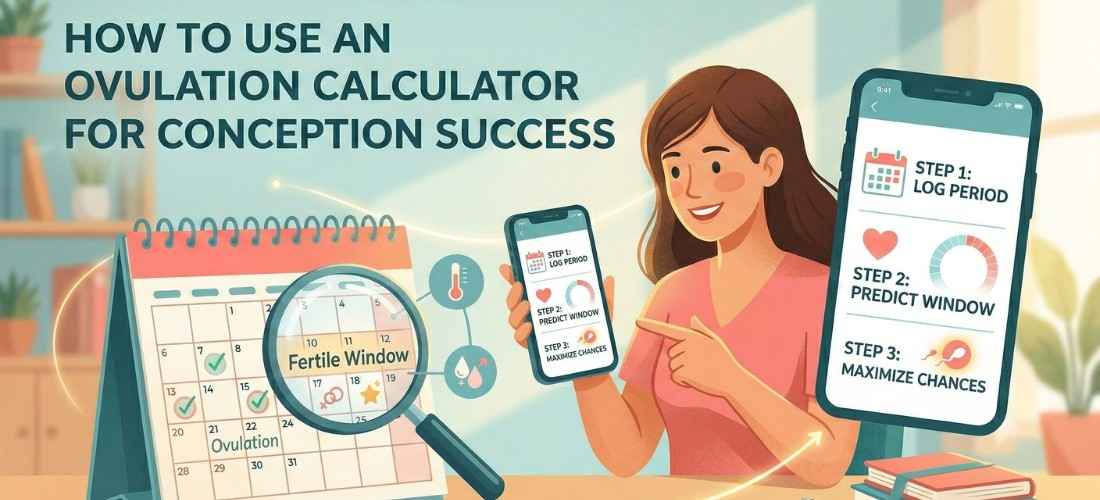
How to Use an Ovulation Calculator for Conception Success
Using an ovulation calculator correctly is essential. Follow these simple steps for better results.
Step 1: Track Your Menstrual Cycle
Record the first day of your period every month. The cycle length is counted from the first day of one period to the next.
Step 2: Enter Cycle Details
Most calculators require:
- Cycle length
- Last period date
- Period duration
This helps estimate your ovulation day and fertile window.
Step 3: Identify Fertile Days
Your most fertile period usually includes:
- 4–5 days before ovulation
- The day of ovulation
- 1 day after ovulation
Having intercourse during this time improves pregnancy chances.
Step 4: Be Consistent
Using an ovulation calculator for conception regularly improves accuracy over time.
Best Time for Intercourse During Ovulation
Timing matters the most. Experts suggest:
- Every alternate day during fertile window
- Daily intercourse during peak ovulation
- Avoid long gaps between attempts
Sperm can survive up to 5 days in the female body, which increases the chances of fertilization if timed correctly.
Tips to Maximize Conception Along with an Ovulation Calculator
Using a calculator alone is not enough. Combine it with healthy lifestyle habits.
Maintain a Healthy Diet
Eat foods that support fertility:
- Leafy greens
- Nuts and seeds
- Fruits and whole grains
- Protein-rich foods
These nutrients support hormonal balance and egg quality.
Exercise Regularly
Moderate physical activity improves blood flow and reproductive health.
Reduce Stress
Stress can affect ovulation. Try:
- Yoga
- Meditation
- Deep breathing
Stay Hydrated
Water improves cervical mucus, which helps sperm travel easily.
Signs of Ovulation to Watch
Along with an ovulation calculator for conception, observing body signs improves accuracy.
Common Ovulation Symptoms
- Clear, stretchy cervical mucus
- Mild pelvic pain
- Increased libido
- Slight rise in basal body temperature
Tracking these signs helps confirm ovulation.
Mistakes to Avoid When Using an Ovulation Calculator
Many couples make errors that reduce success.
Irregular Cycle Miscalculations
Women with irregular periods may need additional methods like ovulation test kits.
Not Tracking Long Enough
Use the calculator for at least 3–6 months.
Ignoring Lifestyle Factors
Poor diet, smoking, and lack of sleep affect fertility.
Who Should Use an Ovulation Calculator?
An ovulation calculator for conception is helpful for:
- Couples trying to conceive naturally
- Women with regular cycles
- First-time pregnancy planners
- Fertility awareness and tracking
However, if you have been trying for more than a year without success, consult a healthcare professional.
When to See a Fertility Specialist
You should seek medical advice if:
- You are over 35 and trying for 6 months
- You have irregular or absent periods
- History of hormonal imbalance
- Known reproductive issues
Early guidance improves outcomes.
Final Thoughts
Using an ovulation calculator for conception is a simple, affordable, and effective way to improve your chances of pregnancy. By tracking your cycle, identifying fertile days, and adopting healthy lifestyle habits, you can significantly increase your conception success. Consistency, patience, and awareness are key to achieving your pregnancy goals naturally.