
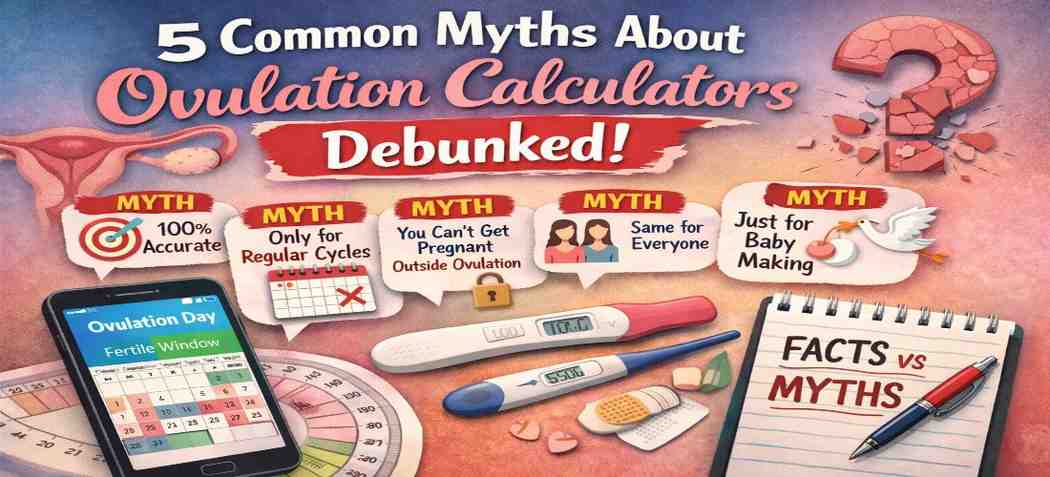
Ovulation calculators have become popular tools for women trying to conceive or track their menstrual cycles. However, there are many misunderstandings surrounding their use. In this article, we’ll clear up the most common ovulation calculator myths and explain the truth behind them so you can use these tools more effectively.
🧠 What Are Ovulation Calculators?
Before diving into the myths, it’s important to understand that ovulation calculators estimate your fertile window based on cycle data like:
- First day of your last period
- Average cycle length
Knowing this helps you better understand the reality behind ovulation calculator myths.
❌ 5 Common Ovulation Calculator Myths Debunked
🚫 Myth 1: Ovulation Calculators Are 100% Accurate
Truth:
One of the biggest ovulation calculator myths is that they are always accurate.
- They provide estimates, not exact dates
- Ovulation can vary due to stress, illness, or hormones
👉 Use them as a guide, not a guarantee.
🚫 Myth 2: Everyone Ovulates on Day 14
Truth:
Not all women have a 28-day cycle.
- Ovulation timing varies from person to person
- It may happen earlier or later
This is why relying on a fixed day is one of the most misleading ovulation calculator myths.
🚫 Myth 3: They Work Perfectly for Irregular Cycles
Truth:
Ovulation calculators are less accurate for irregular cycles.
- Predictions depend on consistency
- Irregular patterns make estimation harder
🚫 Myth 4: You Can Only Get Pregnant on Ovulation Day
Truth:
Fertility is not limited to one day.
- The fertile window lasts 4–5 days before ovulation
- Sperm can survive inside the body
🚫 Myth 5: Ovulation Calculators Replace Medical Advice
Truth:
These tools are helpful but not a substitute for professional guidance.
- They don’t diagnose fertility issues
- Medical advice is essential if you’re facing difficulties
Believing otherwise is one of the most harmful ovulation calculator myths.
⚠️ Why These Myths Matter
Believing incorrect information can:
- Reduce chances of conception
- Cause unnecessary stress
- Lead to poor planning
Understanding the truth behind ovulation calculator myths helps you make better decisions.
🔍 How to Use Ovulation Calculators Correctly
To get the best results:
- Track your cycle regularly
- Use additional methods (BBT, ovulation kits)
- Maintain a healthy lifestyle
- Stay consistent
🌿 Tips to Improve Fertility Tracking
- Monitor cervical mucus
- Maintain a healthy weight
- Reduce stress
- Get proper sleep
These steps enhance the effectiveness beyond just avoiding ovulation calculator myths.
Final Thoughts
Understanding and debunking ovulation calculator myths can help you use these tools more effectively and confidently. While they are useful for predicting fertile days, they should be combined with other tracking methods and healthy habits for the best results.