
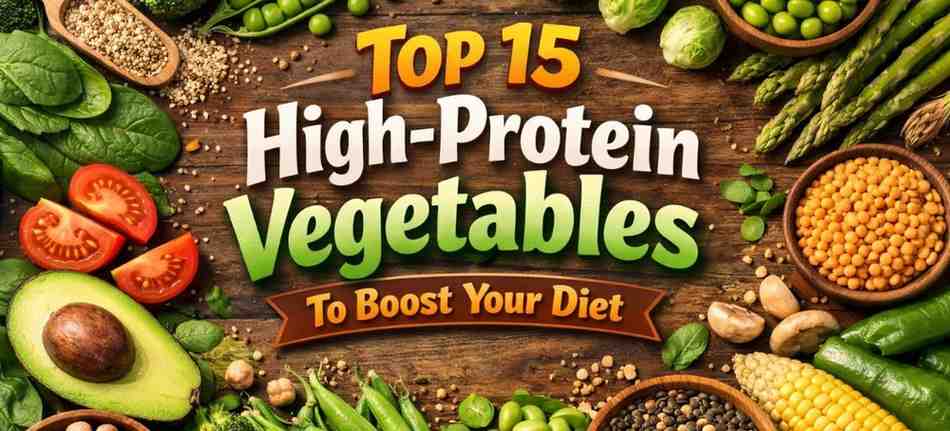
If you’re looking to improve your nutrition, build muscle, or simply eat healthier, adding high-protein vegetables to your meals is a smart choice. While vegetables are often known for vitamins and fiber, many also contain impressive amounts of protein that support muscle repair, weight management, and overall wellness. In this guide, we’ll explore the top 15 high-protein vegetables and how they can boost your daily diet.
Why Choose High-Protein Vegetables?
Including high-protein vegetables in your diet offers several benefits:
- Supports muscle growth and recovery
- Helps maintain lean body mass
- Improves metabolism
- Promotes fullness and weight control
- Enhances heart and digestive health
They are also low in calories and rich in antioxidants, making them ideal for balanced nutrition.
Top 15 High-Protein Vegetables
Here are the best vegetables ranked based on their protein content (per cooked cup, approx.):
🥇 1. Green Peas (8–9g)
One of the most protein-rich vegetables, green peas are excellent for muscle repair and digestion.
🥈 2. Edamame (15–17g)
Technically a legume but often consumed as a vegetable, edamame is extremely high in protein and ideal for plant-based diets.
🥉 3. Lentils (18g)
Another legume frequently grouped with vegetables, lentils provide high protein and fiber.
4. Spinach (5–6g)
Rich in iron and plant protein, spinach supports muscle performance.
5. Broccoli (4–5g)
Contains protein along with anti-inflammatory compounds.
6. Brussels Sprouts (4g)
Boost immunity while contributing protein.
7. Kale (3–4g)
Nutrient-dense and supportive of overall health.
8. Asparagus (3g)
Low calorie and supports metabolism.
9. Sweet Corn (3–4g)
Provides both carbohydrates and protein for energy.
10. Artichokes (4g)
High in fiber and supports digestion.
11. Mushrooms (3g)
Contain plant protein and immune-boosting compounds.
12. Cauliflower (3–4g)
Low-carb and protein-supportive.
13. Collard Greens (3–4g)
Great for bone and muscle health.
14. Bok Choy (2–3g)
Light yet nutritious protein source.
15. Mustard Greens (3g)
Supports detoxification and immunity.
How High-Protein Vegetables Support Muscle Growth
Adding high-protein vegetables to your diet helps:
- Repair muscle tissue after workouts
- Reduce muscle soreness
- Improve endurance
- Maintain strength
For best results, combine vegetables with legumes, tofu, nuts, or whole grains to ensure complete amino acid intake.
Easy Ways to Add High-Protein Vegetables to Your Meals
Breakfast
- Spinach smoothies
- Vegetable omelet alternatives
- Protein-rich vegetable wraps
Lunch
- Quinoa and broccoli bowl
- Lentil and vegetable soup
Dinner
- Stir-fried vegetables with tofu
- Mixed vegetable curry
- Edamame salad
Health Benefits Beyond Protein
High-protein vegetables also:
- Improve gut health (high fiber)
- Support heart health
- Reduce inflammation
- Promote weight loss
- Strengthen immunity
They provide balanced nutrition without excess saturated fat.
Common Mistakes to Avoid
- Not eating enough total calories
- Ignoring protein timing after workouts
- Eating limited variety
- Skipping strength training
Consistency is key for muscle and overall health improvements.
Final Thoughts
Including high-protein vegetables in your daily meals is one of the simplest ways to improve your diet naturally. Whether your goal is muscle growth, weight management, or better overall health, these 15 vegetables can help you meet your protein needs while delivering essential nutrients. Combine them with other plant-based protein sources for the best results and enjoy a stronger, healthier body.