
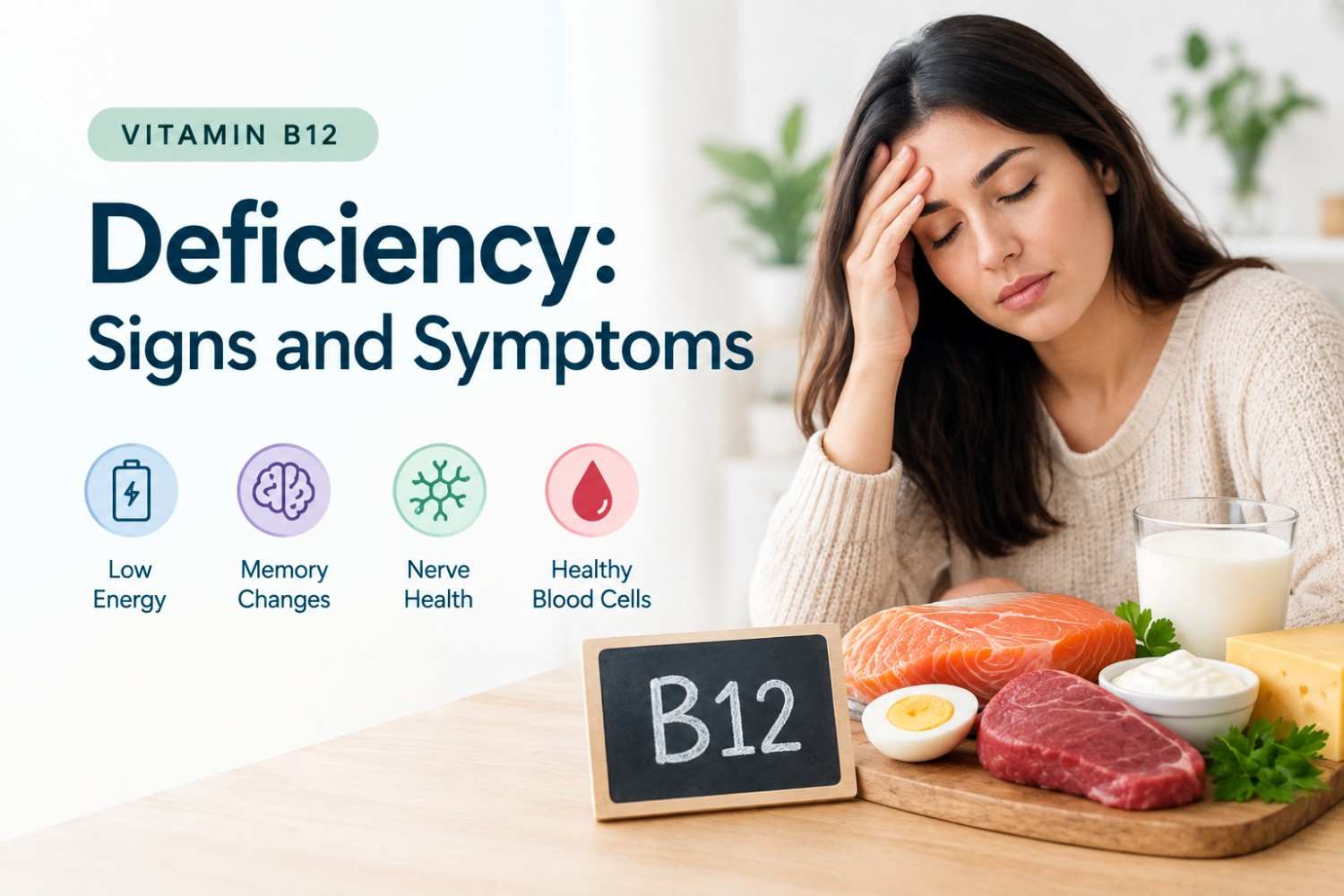
Vitamin B12 deficiency can develop gradually, and its early symptoms may be easy to mistake for tiredness, stress, poor sleep or other everyday health problems. However, vitamin B12 is important for normal red blood cell formation, DNA production and nervous system function, so an ongoing deficiency should not be ignored.
Some people develop vitamin B12 deficiency because they do not get enough from their diet, while others have difficulty absorbing the vitamin even when their diet contains adequate amounts.
Knowing the signs of vitamin B12 deficiency can help you recognize when it may be time to speak with a healthcare professional.
- What Is Vitamin B12 Deficiency?
- What Are the Signs of Vitamin B12 Deficiency?
- 1. Persistent Tiredness and Low Energy
- 2. Weakness and Reduced Physical Stamina
- 3. Pale Skin
- 4. Numbness and Tingling
- 5. Balance and Coordination Problems
- 6. Memory and Concentration Changes
- 7. Sore or Red Tongue
- 8. Headaches and Dizziness
- 9. Shortness of Breath and Heart Palpitations
- 10. Changes in Appetite or Unexplained Weight Loss
- What Causes Vitamin B12 Deficiency?
- A Diet Low in Vitamin B12
- Problems Absorbing Vitamin B12
- Certain Medications
- Who Is More Likely to Develop Vitamin B12 Deficiency?
- Can You Have Vitamin B12 Deficiency Without Anemia?
- How Is Vitamin B12 Deficiency Diagnosed?
- What Happens If Vitamin B12 Deficiency Is Left Untreated?
- How Is Vitamin B12 Deficiency Treated?
- Can Food Alone Correct Vitamin B12 Deficiency?
- When Should You See a Healthcare Professional?
- Vitamin B12 Deficiency: Frequently Asked Questions
- What is the most common symptom of vitamin B12 deficiency?
- Can vitamin B12 deficiency cause numbness?
- Can B12 deficiency cause tiredness?
- Can you have B12 deficiency without anemia?
- Are vegetarians at risk of vitamin B12 deficiency?
- How do you know if you have vitamin B12 deficiency?
- Is vitamin B12 deficiency serious?
What Is Vitamin B12 Deficiency?
Vitamin B12 deficiency occurs when the body does not have enough vitamin B12 to support normal biological functions.
Vitamin B12 is a water-soluble vitamin involved in several essential processes, including the production of healthy red blood cells and maintenance of normal nerve function.
The body can store significant amounts of vitamin B12, so deficiency does not necessarily appear immediately after dietary intake decreases. Symptoms may take years to develop in some people.
A deficiency can also occur because of poor absorption rather than inadequate food intake.
What Are the Signs of Vitamin B12 Deficiency?
The symptoms of vitamin B12 deficiency can vary from person to person. Some people mainly experience fatigue or weakness, while others develop neurological symptoms such as numbness or tingling.
Common signs can include:
- Persistent tiredness
- Weakness
- Pale skin
- Shortness of breath
- Dizziness
- Headaches
- Heart palpitations
- Loss of appetite
- Unexplained weight loss
- A sore or red tongue
- Mouth ulcers
- Numbness or tingling
- Muscle weakness
- Balance problems
- Memory or concentration difficulties
- Changes in mood or thinking
- Vision problems
Not everyone with vitamin B12 deficiency experiences all of these symptoms.
1. Persistent Tiredness and Low Energy
One of the most common signs associated with vitamin B12 deficiency is ongoing tiredness.
When vitamin B12 deficiency affects red blood cell production, megaloblastic anemia can develop. Red blood cells help carry oxygen throughout the body, so problems with their production can contribute to fatigue and weakness.
However, tiredness has many possible causes, including insufficient sleep, stress, anemia from other causes, infections, thyroid problems and lifestyle factors.
If fatigue continues despite adequate rest, it is worth discussing it with a healthcare professional rather than assuming vitamin B12 is the cause.
2. Weakness and Reduced Physical Stamina
A person with vitamin B12 deficiency may feel weaker than usual or find normal physical activities more tiring.
Simple activities such as climbing stairs, walking or exercising may feel more difficult when anemia develops.
Because weakness can occur with many health conditions, it should be considered alongside other symptoms and, when appropriate, evaluated with medical testing.
3. Pale Skin
Pale skin can occur when vitamin B12 deficiency causes megaloblastic anemia.
In this condition, the body produces unusually large and abnormal red blood cells that do not function normally.
Pale skin is not specific to vitamin B12 deficiency, though. Iron deficiency, other forms of anemia and several medical conditions can also cause changes in skin color.
4. Numbness and Tingling
Numbness or a pins-and-needles sensation in the hands or feet is an important symptom to pay attention to.
Vitamin B12 is needed for normal nervous system function. Deficiency can affect nerves and may result in abnormal sensations.
Some people describe the sensation as:
- Tingling
- Burning
- Numbness
- Pins and needles
- Reduced sensitivity
Neurological symptoms can occur even when anemia is not present.
For this reason, persistent numbness or tingling should be discussed with a healthcare professional.
5. Balance and Coordination Problems
Vitamin B12 deficiency can affect the nervous system and, in some cases, contribute to problems with balance and coordination.
You might notice that you feel less steady when walking or have difficulty coordinating certain movements.
Balance problems have many possible causes, so they should not automatically be attributed to vitamin B12 deficiency.
If new or worsening balance problems occur, medical evaluation is important.
6. Memory and Concentration Changes
Some people with vitamin B12 deficiency experience cognitive or neurological changes.
These can include:
- Difficulty concentrating
- Forgetfulness
- Confusion
- Problems with memory
- Changes in understanding or judgment
These symptoms can also be associated with stress, sleep problems, medications, aging and other health conditions.
A medical assessment can help identify the underlying cause.
7. Sore or Red Tongue
A sore, smooth or unusually red tongue can sometimes occur with vitamin B12 deficiency.
Some people may also experience mouth ulcers or soreness inside the mouth.
Because oral symptoms can have many causes, including other nutritional deficiencies and local mouth conditions, they should be considered as part of the overall picture.
8. Headaches and Dizziness
Headaches and dizziness may occur in people with vitamin B12 deficiency, particularly when anemia develops.
However, these symptoms are extremely common and can result from dehydration, sleep problems, migraines, low blood pressure, infections and many other conditions.
Persistent or severe headaches or dizziness should be medically evaluated.
9. Shortness of Breath and Heart Palpitations
When vitamin B12 deficiency contributes to anemia, the body may have difficulty delivering enough oxygen to tissues.
Some people may experience:
- Shortness of breath
- A faster heartbeat
- Heart palpitations
- Reduced exercise tolerance
These symptoms should not automatically be blamed on vitamin B12 deficiency.
New or severe shortness of breath, chest pain or significant heart palpitations require prompt medical attention.
10. Changes in Appetite or Unexplained Weight Loss
Some people with vitamin B12 deficiency may experience reduced appetite or weight loss.
Unintentional weight loss, however, can have many possible causes and should not be ignored.
If you are losing weight without intentionally changing your diet or activity level, speak with a healthcare professional.
What Causes Vitamin B12 Deficiency?
Vitamin B12 deficiency is not always caused by eating too little B12.
There are two broad possibilities:
- Not getting enough vitamin B12
- Having difficulty absorbing vitamin B12
Understanding the cause is important because treatment depends partly on why the deficiency developed.
A Diet Low in Vitamin B12
Vitamin B12 is naturally found mainly in animal-derived foods.
People who do not eat meat, fish, eggs or dairy products may have a greater risk of inadequate B12 intake if they do not regularly consume fortified foods or an appropriate supplement.
This is particularly important for people following a strict vegan diet.
Problems Absorbing Vitamin B12
The digestive system needs several steps to absorb vitamin B12 from food.
Certain stomach or intestinal conditions can interfere with this process.
For example, pernicious anemia can affect the body’s ability to absorb vitamin B12 because of a problem involving intrinsic factor, a protein needed for B12 absorption.
Some gastrointestinal surgeries and digestive disorders can also increase the risk of deficiency.
Certain Medications
Some medicines can affect vitamin B12 absorption or status.
Examples include metformin and certain acid-reducing medications.
This does not mean that you should stop prescribed medication because of concerns about vitamin B12.
If you take medication regularly and are concerned about B12, discuss it with your healthcare professional.
Who Is More Likely to Develop Vitamin B12 Deficiency?
Some groups have a higher risk of vitamin B12 deficiency.
These may include:
- People following a strict vegan diet without reliable B12 sources
- Older adults
- People with certain digestive disorders
- People who have undergone certain stomach or intestinal surgeries
- People with pernicious anemia
- People taking certain medications for long periods
- People with conditions that affect nutrient absorption
Having one of these risk factors does not automatically mean you have a deficiency.
Can You Have Vitamin B12 Deficiency Without Anemia?
Yes.
Vitamin B12 deficiency can cause neurological symptoms even when a person does not have obvious anemia.
This is important because someone may assume that their B12 level is normal simply because they do not have anemia.
Symptoms such as persistent numbness, tingling, balance problems or cognitive changes deserve medical attention, especially when risk factors for B12 deficiency are present.
How Is Vitamin B12 Deficiency Diagnosed?
Symptoms alone cannot confirm vitamin B12 deficiency.
A healthcare professional may consider:
- Your symptoms
- Your diet
- Medical history
- Medications
- Existing health conditions
- Blood test results
Blood testing can measure vitamin B12 levels and can also assess blood cell characteristics.
In some situations, additional tests may be used to clarify whether a person has a functional B12 deficiency.
The exact tests needed depend on the individual and should be determined by a healthcare professional.
What Happens If Vitamin B12 Deficiency Is Left Untreated?
Vitamin B12 deficiency can usually be treated, but leaving a significant deficiency untreated for a long time can cause complications.
Possible complications include:
- Worsening anemia
- Nerve problems
- Balance and coordination difficulties
- Memory or cognitive changes
- Vision problems
- Peripheral nerve damage
Some neurological effects can become permanent if the deficiency is severe or remains untreated for a long time.
This is why early evaluation and appropriate treatment are important when deficiency is suspected.
How Is Vitamin B12 Deficiency Treated?
Treatment depends on the cause and severity of the deficiency.
Depending on the situation, treatment may involve vitamin B12 tablets, injections or dietary changes.
People whose deficiency is related primarily to inadequate dietary intake may be advised to increase B12-rich or fortified foods and may be recommended an appropriate supplement.
People who have problems absorbing B12 may require a different treatment approach.
The treatment plan should be determined by a healthcare professional after the cause of the deficiency has been considered.
Can Food Alone Correct Vitamin B12 Deficiency?
It depends on why the deficiency developed.
If inadequate dietary intake is the main problem, increasing B12-containing foods or using an appropriate supplement may help.
However, if the body cannot absorb vitamin B12 properly, simply eating more B12-rich food may not be enough.
This is why identifying the underlying cause is important.
When Should You See a Healthcare Professional?
Consider speaking with a healthcare professional if you experience symptoms such as:
- Persistent unexplained fatigue
- Repeated numbness or tingling
- Balance or coordination problems
- Unexplained weakness
- Memory or concentration changes
- Pale skin with other symptoms of anemia
- Unexplained weight loss
- Persistent tongue or mouth changes
You should also discuss B12 testing if you have a higher risk of deficiency because of your diet, digestive health, previous gastrointestinal surgery or certain long-term medications.
Seek urgent medical care for serious symptoms such as severe difficulty breathing, chest pain, fainting or sudden neurological changes.
Vitamin B12 Deficiency: Frequently Asked Questions
What is the most common symptom of vitamin B12 deficiency?
Fatigue and weakness are common symptoms, particularly when deficiency causes anemia. However, symptoms vary, and neurological symptoms such as numbness and tingling can also occur.
Can vitamin B12 deficiency cause numbness?
Yes. Vitamin B12 deficiency can affect the nervous system and may cause numbness, tingling or other abnormal sensations.
Can B12 deficiency cause tiredness?
Yes. Vitamin B12 deficiency can contribute to tiredness and weakness, especially when it causes anemia. However, fatigue has many possible causes.
Can you have B12 deficiency without anemia?
Yes. Neurological symptoms can occur even when anemia is not present.
Are vegetarians at risk of vitamin B12 deficiency?
People who consume some animal products may obtain B12 from eggs and dairy, depending on their diet. People following a strict vegan diet have a higher risk unless they regularly consume reliable fortified foods or supplements.
How do you know if you have vitamin B12 deficiency?
Symptoms alone cannot confirm deficiency. A healthcare professional may recommend blood tests based on your symptoms, diet, medical history and risk factors.
Is vitamin B12 deficiency serious?
It can be, particularly when it remains untreated for a long time. Some neurological complications may become permanent, which is why suspected deficiency should be evaluated.
Final Thoughts
Vitamin B12 deficiency can develop slowly, and its symptoms may initially seem unrelated to nutrition. Fatigue, weakness, numbness, tingling, balance problems, memory changes and mouth or tongue changes are among the possible signs.
However, these symptoms are not unique to vitamin B12 deficiency. The same symptoms can occur with many other health conditions, so self-diagnosis is not recommended.
If you have persistent symptoms or risk factors for vitamin B12 deficiency, speak with a healthcare professional about whether testing is appropriate. Identifying the underlying cause is especially important because treatment can differ depending on whether the problem comes from diet, absorption or another health condition.
Medical Disclaimer: This article is for general educational purposes only. It is not intended to diagnose, treat or prevent any medical condition. If you are experiencing symptoms of vitamin B12 deficiency or have concerns about your health, consult a qualified healthcare professional.