
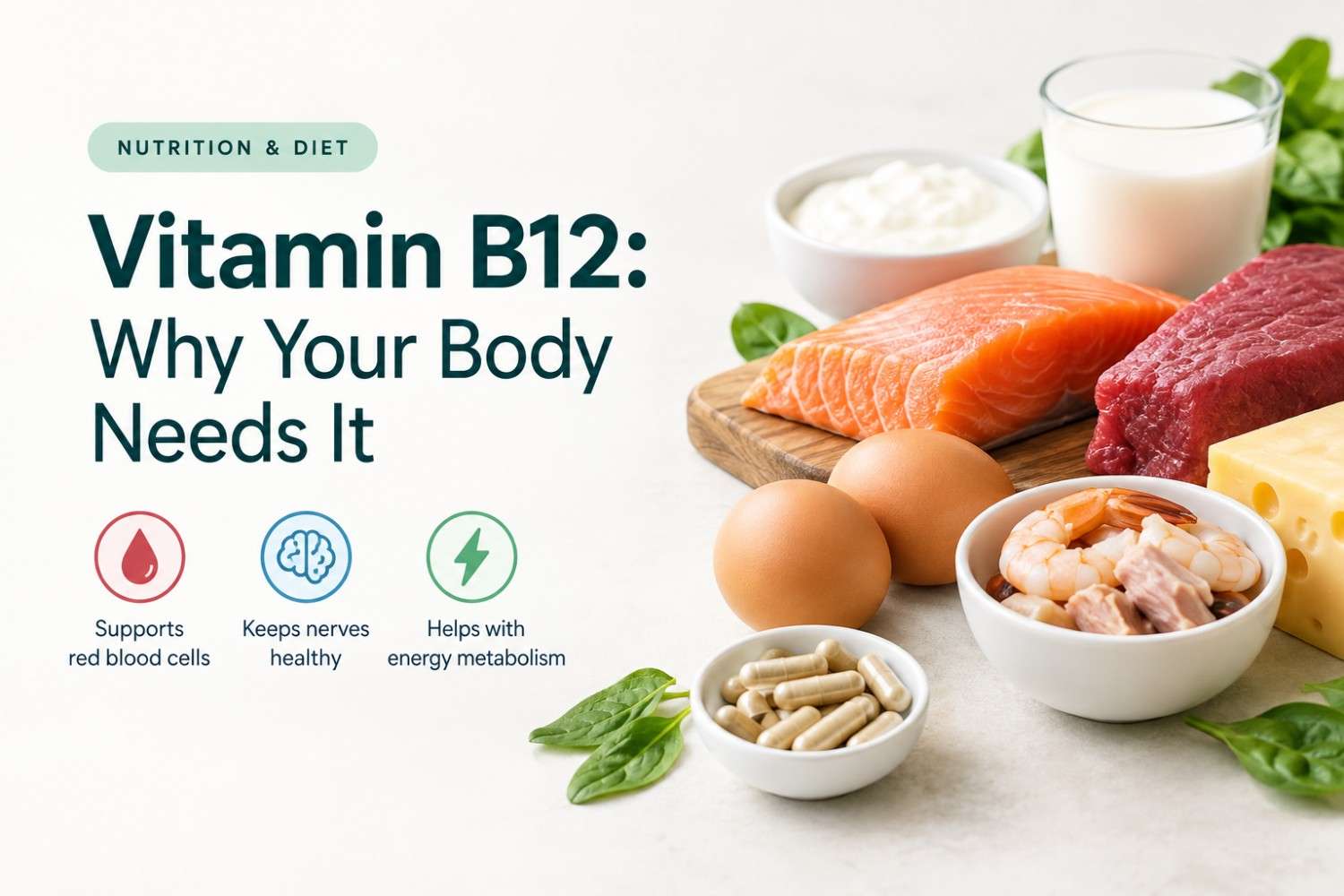
Vitamin B12 is an essential nutrient that your body needs to keep your blood cells and nerve cells healthy and to make DNA, the genetic material found in your cells. Because the body cannot make vitamin B12 on its own, you need to obtain it from food or supplements.
Vitamin B12 is naturally found mainly in animal-based foods, while fortified foods and supplements can provide it for people who do not get enough from their diet. Understanding why vitamin B12 matters can help you make informed choices about your everyday nutrition.
- What Is Vitamin B12?
- Why Does Your Body Need Vitamin B12?
- How Much Vitamin B12 Do You Need?
- Where Can You Get Vitamin B12?
- Can Vegetarians and Vegans Get Enough Vitamin B12?
- What Happens If You Don't Get Enough Vitamin B12?
- Who May Be at Higher Risk of Vitamin B12 Deficiency?
- How Is Vitamin B12 Deficiency Diagnosed?
- Vitamin B12 Supplements: Does Everyone Need One?
- Can You Get Too Much Vitamin B12?
- Vitamin B12 and Energy: What's the Connection?
- Simple Ways to Include More Vitamin B12 in Your Diet
- Frequently Asked Questions About Vitamin B12
- Final Thoughts
What Is Vitamin B12?
Vitamin B12, also called cobalamin, is a water-soluble vitamin that plays several important roles throughout the body.
Unlike some nutrients that the body can produce or store only in small amounts, vitamin B12 can be stored in the liver for a long time. This means a deficiency may take years to develop in some people, although the time can vary depending on diet, absorption and individual health factors.
Vitamin B12 is particularly important for:
- Normal red blood cell formation
- Healthy nerve function
- DNA production
- Normal cell metabolism
- Converting food into usable energy through normal metabolic processes
Because these functions are essential for everyday health, getting enough vitamin B12 is important at every stage of life.
Why Does Your Body Need Vitamin B12?
1. It Helps Keep Nerve Cells Healthy
One of vitamin B12’s important roles is supporting the normal function of the nervous system.
Nerves rely on protective structures that help nerve signals travel properly. Vitamin B12 is involved in maintaining these structures and normal neurological function.
When vitamin B12 levels become too low, neurological problems can develop. These may include tingling, numbness, balance problems or changes in sensation.
This is one reason persistent symptoms should not be ignored.
2. It Supports Red Blood Cell Formation
Vitamin B12 is necessary for the normal production of red blood cells.
Red blood cells carry oxygen from the lungs to tissues throughout the body. When vitamin B12 deficiency affects red blood cell production, a type of anemia called megaloblastic anemia can develop.
This can cause symptoms such as:
- Tiredness
- Weakness
- Pale skin
- Shortness of breath
- Dizziness
However, these symptoms can have many possible causes, so they do not automatically mean that someone has a vitamin B12 deficiency.
3. It Helps Make DNA
DNA contains the genetic instructions used by your cells.
Vitamin B12 is involved in DNA synthesis and normal cell division. This is especially important for tissues where cells are regularly produced, including blood cells.
Adequate vitamin B12 therefore supports normal cellular function throughout the body.
4. It Supports Normal Energy Metabolism
Vitamin B12 is often marketed as an “energy vitamin,” but there is an important distinction.
Vitamin B12 does not act like a stimulant and taking extra B12 does not necessarily give healthy people an immediate energy boost.
Instead, B12 participates in normal metabolic processes that help your body use nutrients. If someone has a vitamin B12 deficiency, correcting that deficiency may improve symptoms such as fatigue.
How Much Vitamin B12 Do You Need?
The amount of vitamin B12 needed depends on age and life stage.
For most adults, the recommended daily amount is 2.4 micrograms (mcg).
Requirements are higher during pregnancy and breastfeeding:
- Adults: 2.4 mcg per day
- Pregnancy: 2.6 mcg per day
- Breastfeeding: 2.8 mcg per day
Children and teenagers need different amounts depending on their age.
These are general recommended amounts, not personalized medical advice. Individual needs may differ, particularly when absorption problems or certain medical conditions are present.
Where Can You Get Vitamin B12?
Vitamin B12 is naturally present in many animal-derived foods.
Good food sources include:
Fish and Seafood
Fish and shellfish can provide substantial amounts of vitamin B12. Options may include salmon, tuna, sardines, trout and clams.
Meat
Beef, poultry and other meats can contribute vitamin B12 to the diet.
Organ meats, particularly liver, can contain very high amounts of B12. Because of this, they do not need to be eaten frequently to contribute significant amounts.
Eggs
Eggs provide vitamin B12 and can be an accessible source for people who include eggs in their diet.
Milk and Dairy Products
Milk, yogurt and cheese can contribute vitamin B12.
Fortified Foods
Some breakfast cereals, plant-based milk alternatives, nutritional yeast products and other foods may have vitamin B12 added to them.
If you follow a vegetarian or vegan diet, checking food labels for B12 fortification can be particularly useful.
Can Vegetarians and Vegans Get Enough Vitamin B12?
Yes, but getting adequate vitamin B12 requires planning.
Most plant foods do not naturally contain reliable amounts of vitamin B12. Some plant-based foods are fortified with B12, while supplements can provide another option.
People following a vegan diet should pay particular attention to their B12 intake because avoiding animal products can substantially reduce dietary sources.
If you follow a vegetarian or vegan diet, discuss appropriate B12 supplementation with a healthcare professional, especially if your diet contains few or no fortified foods.
What Happens If You Don’t Get Enough Vitamin B12?
When the body does not receive or absorb enough vitamin B12, deficiency can develop.
Because the body stores B12, deficiency may develop gradually rather than suddenly.
Possible signs and symptoms include:
- Persistent tiredness
- Weakness
- Pale skin
- Dizziness
- Tingling or numbness in the hands or feet
- Balance difficulties
- A sore or swollen tongue
- Changes in vision
- Difficulty concentrating
- Memory or cognitive changes
Not everyone experiences the same symptoms.
Importantly, neurological symptoms can sometimes occur even when anemia is not obvious. This is one reason suspected deficiency should be evaluated rather than treated based only on symptoms.
Who May Be at Higher Risk of Vitamin B12 Deficiency?
Some people are more likely to develop B12 deficiency.
Older Adults
The ability to absorb vitamin B12 from food can decrease with age in some people.
People Following Vegan or Strict Vegetarian Diets
Because natural B12 is mainly found in animal-derived foods, people who avoid these foods may have a higher risk unless they consume fortified foods or appropriate supplements.
People With Certain Digestive Conditions
Some gastrointestinal conditions can interfere with the absorption of vitamin B12.
People Who Have Had Certain Gastrointestinal Surgeries
Some surgeries involving the stomach or intestines can affect B12 absorption.
People Taking Certain Medications
Some medicines can interfere with vitamin B12 absorption or levels. This includes certain medications used for diabetes and acid-related digestive problems.
If you take medication regularly, do not stop or change it because of concerns about vitamin B12. Discuss your concerns with your healthcare professional.
How Is Vitamin B12 Deficiency Diagnosed?
Symptoms alone cannot confirm vitamin B12 deficiency.
A healthcare professional may consider your diet, symptoms, medical history and medications and may recommend blood tests.
Depending on the situation, testing may include vitamin B12 levels along with other blood measurements or additional markers.
If you have persistent fatigue, numbness, tingling, balance problems or other concerning symptoms, it is better to seek professional evaluation rather than assuming that B12 is the cause.
Vitamin B12 Supplements: Does Everyone Need One?
Not everyone needs a vitamin B12 supplement.
People who eat a varied diet containing adequate B12 may not need additional supplementation.
However, supplements may be recommended for some people, including those who have difficulty absorbing B12 or those whose diets provide little or no B12.
Vitamin B12 supplements are available in different forms and doses. The appropriate option depends on the person’s diet, health situation and reason for supplementation.
If you suspect a deficiency, speak with a healthcare professional before taking high-dose supplements.
Can You Get Too Much Vitamin B12?
Vitamin B12 is generally considered to have a low potential for toxicity, and no upper intake level has been established for it.
However, this does not mean that everyone should automatically take high-dose supplements.
More is not always better when it comes to nutrition. Supplements should be used for a clear reason and according to appropriate guidance.
Vitamin B12 and Energy: What’s the Connection?
One of the most common claims about vitamin B12 is that it increases energy.
The reality is more specific.
B12 is involved in normal energy metabolism, but it is not a stimulant. If you are not deficient, taking additional B12 does not necessarily make you feel more energetic.
If fatigue is caused by B12 deficiency, treating the deficiency may help improve energy and other related symptoms.
However, fatigue can also result from inadequate sleep, stress, anemia, nutritional deficiencies, illness and many other factors.
If tiredness persists, identifying the underlying cause is more useful than simply taking an energy supplement.
Simple Ways to Include More Vitamin B12 in Your Diet
You can support adequate B12 intake by including appropriate foods in your regular eating pattern.
Depending on your diet, consider:
- Fish or seafood
- Lean meat or poultry
- Eggs
- Milk or yogurt
- Fortified breakfast cereals
- Fortified plant-based milk
- Other B12-fortified foods
If you follow a vegan diet, pay particular attention to fortified foods and reliable B12 supplementation.
Frequently Asked Questions About Vitamin B12
What does vitamin B12 do?
Vitamin B12 supports normal red blood cell formation, nerve function, DNA synthesis and cellular metabolism.
How much vitamin B12 do adults need?
Most adults need approximately 2.4 micrograms of vitamin B12 per day. Requirements are higher during pregnancy and breastfeeding.
Does meat contain vitamin B12?
No. Vitamin B12 occurs naturally mainly in animal-derived foods, but fortified foods and supplements can also supply B12.
Can vitamin B12 give you energy?
B12 supports normal energy metabolism, but it is not a stimulant. Treating the deficiency appropriately may improve fatigue in people who are deficient.
Can vegans get enough vitamin B12?
Yes. Vegans can obtain B12 from fortified foods and supplements. Reliable B12 intake is particularly important because unfortified plant foods generally do not provide dependable amounts.
What are common signs of B12 deficiency?
Possible signs include fatigue, weakness, pale skin, tingling or numbness, balance problems, and cognitive or neurological changes. Doctors may order tests because these symptoms have many possible causes.
Should everyone take a B12 supplement?
No. Supplementation depends on diet, absorption, health conditions and individual needs. People with a suspected deficiency should speak with a healthcare professional.
Final Thoughts
Vitamin B12 is a small nutrient with an important role in the body. It supports healthy red blood cells, normal nerve function, DNA production and normal energy metabolism.
For many people, a varied diet can provide adequate B12. People who follow vegan or vegetarian diets, have certain digestive conditions, take particular medications or have problems absorbing nutrients may need to pay closer attention to their intake.
The key is not simply taking more vitamin B12, but understanding where your B12 comes from and whether you are getting enough. If you experience persistent fatigue, numbness, balance problems or other symptoms associated with deficiency, speak with a healthcare professional about whether testing is appropriate.
The authors provide general educational information in this article and do not replace professional medical advice, diagnosis, or treatment. If you have symptoms or concerns about vitamin B12 deficiency, consult a qualified healthcare professional.