
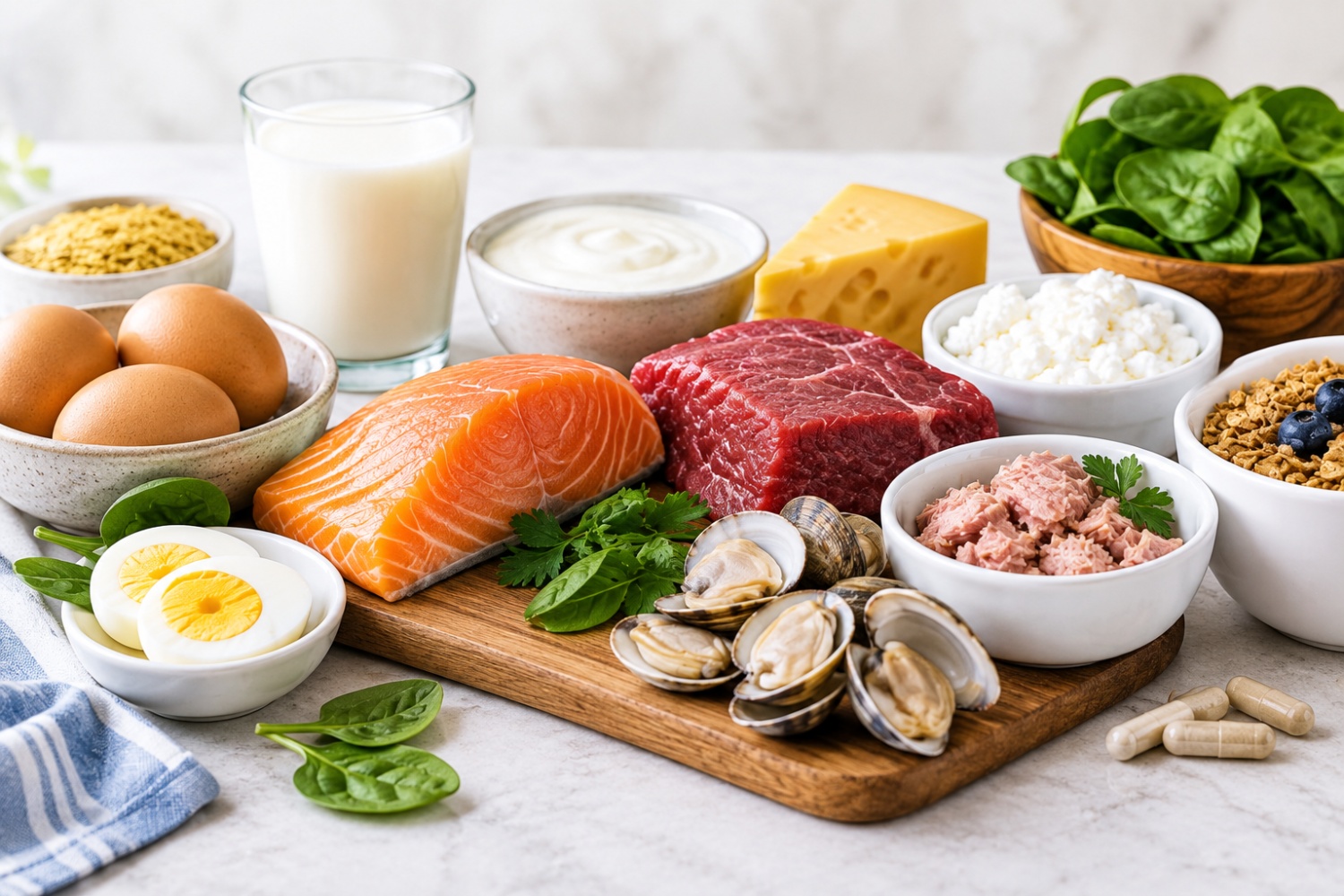
Vitamin B12 is an essential nutrient, and one of the simplest ways to support adequate intake is to include reliable vitamin B12 foods in your regular diet.
Vitamin B12 is naturally found mainly in animal-based foods such as fish, meat, poultry, eggs and dairy products. Some foods, including certain breakfast cereals, plant-based milk alternatives and nutritional yeast products, can also contain vitamin B12 when they have been fortified with it.
For most adults, the recommended daily amount of vitamin B12 is 2.4 micrograms (mcg). Requirements increase to 2.6 mcg during pregnancy and 2.8 mcg during breastfeeding.
This guide explains the best B12-rich foods, how much B12 some common foods provide, and how vegetarians and vegans can include reliable sources in their diets.
- What Is Vitamin B12?
- How Much Vitamin B12 Do You Need?
- Best Vitamin B12 Foods
- Best Vitamin B12 Foods at a Glance
- Vitamin B12 Foods for Vegetarians
- Best Vitamin B12 Foods for Vegans
- Are There Natural Plant Foods With Vitamin B12?
- How to Choose B12-Fortified Foods
- Easy Vitamin B12 Meal Ideas
- How to Get More Vitamin B12 From Your Everyday Diet
- Does Cooking Destroy Vitamin B12?
- Food Sources vs Vitamin B12 Supplements
- Who Should Pay Extra Attention to Vitamin B12 Intake?
- Frequently Asked Questions About Vitamin B12 Foods
- What food is highest in vitamin B12?
- Which fruits are high in vitamin B12?
- Which vegetables contain vitamin B12?
- Are eggs a good source of vitamin B12?
- Is milk high in vitamin B12?
- What are the best vitamin B12 foods for vegetarians?
- What are the best vitamin B12 foods for vegans?
- Can you get enough vitamin B12 from food?
- Is vitamin B12 found naturally in plant foods?
What Is Vitamin B12?
Vitamin B12, also known as cobalamin, is a water-soluble vitamin involved in normal red blood cell formation, nervous system function and DNA production.
Your body can store vitamin B12, particularly in the liver, which means a dietary shortage may not immediately cause symptoms. However, maintaining adequate intake is still important for long-term health.
If you want to understand the broader role of this vitamin, read our guide on [why your body needs vitamin B12].
How Much Vitamin B12 Do You Need?
Daily vitamin B12 requirements vary according to age and life stage.
| Life stage | Recommended amount per day |
|---|---|
| Infants 0–6 months | 0.4 mcg |
| Infants 7–12 months | 0.5 mcg |
| Children 1–3 years | 0.9 mcg |
| Children 4–8 years | 1.2 mcg |
| Children 9–13 years | 1.8 mcg |
| Teenagers 14–18 years | 2.4 mcg |
| Adults 19+ years | 2.4 mcg |
| Pregnancy | 2.6 mcg |
| Breastfeeding | 2.8 mcg |
These values are general dietary reference amounts. Individual nutritional needs can differ depending on health, diet and absorption.
Best Vitamin B12 Foods
Here are some of the most useful food sources of vitamin B12.
1. Beef Liver
Beef liver is one of the richest natural sources of vitamin B12.
According to the NIH, 3 ounces of cooked beef liver can provide around 70.7 mcg of vitamin B12, far exceeding the daily requirement for most adults.
Because liver is extremely rich in several nutrients, it does not need to be eaten frequently to contribute substantial amounts of B12.
Good for: People who eat meat and want a concentrated natural B12 source.
Important: Pregnant people should seek professional dietary advice before eating liver because liver is also very high in vitamin A.
2. Clams and Shellfish
Shellfish can be excellent sources of vitamin B12.
Three ounces of cooked clams provide approximately 17 mcg of vitamin B12, according to NIH data. Oysters are another particularly rich source.
Other shellfish, including mussels and scallops, can also contribute B12.
Good for: People who enjoy seafood and want nutrient-dense food choices.
3. Salmon
Salmon is a practical source of vitamin B12 and also provides high-quality protein and omega-3 fatty acids.
Three ounces of cooked Atlantic salmon provide approximately 2.6 mcg of vitamin B12, which is slightly above the daily requirement for most adults.
You can enjoy salmon:
- Grilled with vegetables
- Baked with herbs
- Added to salads
- Served with rice
- Used in sandwiches or wraps
4. Tuna
Tuna is another convenient seafood source.
Three ounces of canned light tuna in water provide approximately 2.5 mcg of vitamin B12.
Tuna can be useful for quick meals such as:
- Tuna salad
- Whole-grain sandwiches
- Rice bowls
- Wraps
- Pasta dishes
Choose seafood varieties and portions that fit your overall dietary needs.
5. Beef
Beef can contribute a significant amount of vitamin B12.
For example, 3 ounces of cooked ground beef containing approximately 85% lean meat provides around 2.4 mcg of vitamin B12.
That is roughly the adult daily requirement.
You do not need to rely on red meat alone, however. Rotating different B12-rich foods can provide greater dietary variety.
6. Chicken and Turkey
Poultry contains vitamin B12, although amounts can vary depending on the cut and preparation.
Chicken and turkey can be useful additions to a balanced diet, especially for people who prefer leaner meat choices.
Try them in:
- Homemade soups
- Salads
- Stir-fries
- Sandwiches
- Grain bowls
- Homemade wraps
7. Milk
Milk is an accessible source of vitamin B12.
One cup of 2% milk provides approximately 1.3 mcg of vitamin B12 according to NIH data.
For people who consume dairy, milk can make it easier to include B12 regularly without needing a specialized food.
8. Yogurt
Plain yogurt can also contribute vitamin B12.
A 6-ounce serving of plain fat-free yogurt contains approximately 1 mcg of vitamin B12.
You can add yogurt to:
- Breakfast bowls
- Smoothies
- Fruit
- Oats
- Homemade dips
The exact B12 amount varies by product, so check the nutrition label when the information is provided.
9. Cheese
Cheese contains vitamin B12 in varying amounts.
For example, 1.5 ounces of cheddar cheese provides approximately 0.5 mcg of vitamin B12.
Cheese can be combined with other B12 sources such as eggs, milk or fortified foods to create a varied diet.
10. Eggs
Eggs provide a convenient source of vitamin B12.
One large cooked egg contains approximately 0.5 mcg of vitamin B12.
Eggs can be included in many simple meals:
- Boiled eggs
- Omelets
- Scrambled eggs
- Egg sandwiches
- Vegetable omelets
- Egg and whole-grain toast
For people who eat eggs but little or no meat, they can contribute to overall B12 intake.
Best Vitamin B12 Foods at a Glance
| Food | Approximate B12 per serving |
|---|---|
| Cooked beef liver, 3 oz | 70.7 mcg |
| Cooked clams, 3 oz | 17 mcg |
| Cooked oysters, 3 oz | 14.9 mcg |
| Fortified nutritional yeast, about ¼ cup* | 8.3–24 mcg |
| Cooked salmon, 3 oz | 2.6 mcg |
| Canned light tuna, 3 oz | 2.5 mcg |
| Cooked ground beef, 3 oz | 2.4 mcg |
| Milk, 1 cup | 1.3 mcg |
| Plain yogurt, 6 oz | 1.0 mcg |
| Cheddar cheese, 1.5 oz | 0.5 mcg |
| Cooked egg, 1 large | 0.5 mcg |
*Fortified nutritional yeast varies substantially by brand, so always check the product label.
Values can vary depending on food type, preparation, serving size and brand. The figures above are representative values from NIH data.
Vitamin B12 Foods for Vegetarians
Vegetarians may have several dietary options for obtaining vitamin B12.
Depending on the type of vegetarian diet, useful sources can include:
- Milk
- Yogurt
- Cheese
- Eggs
- Fortified breakfast cereals
- Fortified plant-based milk
- Fortified nutritional yeast
People who include dairy and eggs regularly may obtain B12 from these foods.
However, dietary patterns vary considerably. If you eat very little or no animal-derived food, pay closer attention to fortified foods and reliable sources of B12.
Best Vitamin B12 Foods for Vegans
This is an especially important consideration because plant foods do not naturally provide reliable vitamin B12 unless they are fortified.
Useful vegan sources may include:
Fortified Breakfast Cereals
Some breakfast cereals are fortified with vitamin B12.
Check the nutrition label to determine whether B12 has been added and how much a serving provides.
Fortified Plant-Based Milk
Soy, almond, oat and other plant-based milk products may be fortified with B12.
However, fortification varies between brands, so check the label rather than assuming every plant-based milk contains B12.
Fortified Nutritional Yeast
Some nutritional yeast products are fortified with vitamin B12.
This can be a convenient ingredient for people following a plant-based diet.
It can be sprinkled over:
- Pasta
- Vegetables
- Popcorn
- Rice
- Salads
- Homemade sauces
The amount of B12 varies significantly among products.
B12 Supplements
Some vegans may need a vitamin B12 supplement to reliably meet their needs.
The appropriate supplement and dose depend on the individual’s diet and circumstances. If you follow a vegan diet, discuss B12 supplementation with a qualified healthcare professional or registered dietitian.
Are There Natural Plant Foods With Vitamin B12?
This is a common question.
Most unfortified plant foods do not provide a reliable natural source of vitamin B12.
Foods such as:
- Bananas
- Apples
- Spinach
- Beans
- Rice
- Whole grains
- Nuts
are nutritious foods, but they should not be relied upon as natural sources of vitamin B12.
Some plant-based foods may contain B12 because they have been fortified with it. Always check the nutrition label to distinguish naturally occurring nutrients from added B12.
How to Choose B12-Fortified Foods
If you are vegetarian or vegan, food labels become particularly important.
When shopping, look for terms such as:
- Vitamin B12
- Cobalamin
- Fortified with vitamin B12
- Added vitamin B12
Compare the amount per serving and consider how frequently you consume the product.
Do not assume that two similar products contain the same amount of B12. Fortification levels can vary considerably between brands.
Easy Vitamin B12 Meal Ideas
You don’t need complicated recipes to include B12-rich foods in your diet.
Breakfast
Try:
- Eggs with whole-grain toast and milk
- Fortified breakfast cereal with milk
- Yogurt with fruit and oats
- Fortified plant-based milk with a balanced breakfast
Lunch
Options include:
- Grilled chicken salad
- Tuna sandwich
- Egg and vegetable wrap
- Salmon rice bowl
- Yogurt-based vegetable bowl
Dinner
Consider:
- Baked salmon with vegetables
- Chicken with brown rice and vegetables
- Lean beef with a mixed vegetable side
- Fish curry with rice
- Egg and vegetable dishes
Plant-Based Meal Ideas
For a vegan diet, consider:
- B12-fortified cereal with fortified plant milk
- B12-fortified nutritional yeast added to meals
- Fortified plant-based foods combined with legumes, vegetables and whole grains
The goal is to create a varied dietary pattern rather than relying on one food every day.
How to Get More Vitamin B12 From Your Everyday Diet
A few simple habits can make B12 intake easier.
1. Include a Reliable B12 Source Regularly
If you eat animal products, rotate fish, meat, eggs and dairy foods throughout the week.
2. Read Labels on Fortified Foods
Fortification differs between products, so check the nutrition information.
3. Choose Variety
Instead of relying on a single food, include different B12 sources throughout your meals.
4. Consider Your Dietary Pattern
Vegans and people who eat very little animal food need to pay particular attention to fortified foods or supplementation.
5. Consider Absorption as Well as Intake
Eating B12-rich foods does not guarantee adequate B12 status in every person.
Certain digestive conditions, surgeries and medications can affect B12 absorption. If you have risk factors or symptoms of deficiency, discuss them with a healthcare professional.
Does Cooking Destroy Vitamin B12?
Food preparation can affect nutrient levels, and losses can vary according to cooking method and food.
This does not mean that you should avoid cooking B12-rich foods. Properly prepared fish, meat, eggs and dairy products can remain useful sources of vitamin B12.
The bigger dietary priority is consuming reliable B12 sources regularly rather than trying to avoid all nutrient loss during cooking.
Food Sources vs Vitamin B12 Supplements
For many people, food is an excellent way to obtain nutrients.
However, supplements or fortified foods can be particularly useful when:
- Your diet contains little or no animal food
- You follow a vegan diet
- Your healthcare professional has identified a deficiency
- You have an absorption problem
- Your nutritional needs are difficult to meet through food alone
Vitamin B12 supplements are available in several forms and doses. There is not enough evidence to conclude that one common supplemental form is universally better than the others.
If you suspect a deficiency, don’t rely solely on food changes. Your healthcare professional can determine whether testing or supplementation is appropriate.
For more information, see our guide to [vitamin B12 deficiency signs and symptoms].
Who Should Pay Extra Attention to Vitamin B12 Intake?
Some people need to be particularly mindful of B12 intake.
These include:
- Vegans
- Strict vegetarians with limited dairy and egg intake
- Older adults
- People with certain digestive conditions
- People who have undergone certain gastrointestinal surgeries
- People taking certain medications that can affect B12 absorption
This does not mean everyone in these groups has a deficiency. It simply means that B12 intake or absorption may deserve additional attention.
Frequently Asked Questions About Vitamin B12 Foods
What food is highest in vitamin B12?
Beef liver is one of the richest food sources of vitamin B12. Shellfish such as clams and oysters are also exceptionally rich sources.
Which fruits are high in vitamin B12?
Fruits are generally not natural sources of vitamin B12. Plant foods do not naturally contain reliable B12 unless they have been fortified.
Which vegetables contain vitamin B12?
Most vegetables are not natural sources of vitamin B12. Vegetables remain important for overall nutrition, but they should not be relied upon to meet B12 requirements.
Are eggs a good source of vitamin B12?
Yes. Eggs provide vitamin B12 and can contribute to daily intake, although one egg alone does not provide the full adult daily requirement.
Is milk high in vitamin B12?
Milk provides a useful amount of vitamin B12. One cup of 2% milk contains approximately 1.3 mcg according to NIH data.
What are the best vitamin B12 foods for vegetarians?
Depending on the diet, useful options include eggs, milk, yogurt, cheese and B12-fortified foods.
What are the best vitamin B12 foods for vegans?
Reliable vegan options include B12-fortified breakfast cereals, fortified plant-based milk and fortified nutritional yeast. A B12 supplement may also be appropriate for some people.
Can you get enough vitamin B12 from food?
Many people can meet their B12 requirements through a varied diet containing reliable B12 sources. However, people with restricted diets or absorption problems may need fortified foods or supplements.
Is vitamin B12 found naturally in plant foods?
Generally, no. Plant foods do not naturally provide reliable vitamin B12. Fortified plant foods can provide B12 when it has been added during manufacturing.
Final Thoughts
The best vitamin B12 foods include fish, shellfish, meat, poultry, eggs and dairy products. For people following vegetarian or vegan diets, fortified foods can provide an important alternative source.
You don’t necessarily need to eat the same B12-rich food every day. A varied diet can help you obtain vitamin B12 while also providing protein, minerals, healthy fats and other essential nutrients.
If your diet contains little or no animal food, pay particular attention to fortified products and reliable B12 sources. And if you have symptoms associated with deficiency or a condition that may affect absorption, speak with a healthcare professional rather than relying on diet alone.
Medical Disclaimer: This article is intended for general educational purposes and does not replace medical advice, diagnosis or treatment. Nutritional needs vary between individuals. If you are concerned about vitamin B12 deficiency or supplementation, consult a qualified healthcare professional or registered dietitian.
Also read: Vitamin B12 Deficiency: Signs and Symptoms