
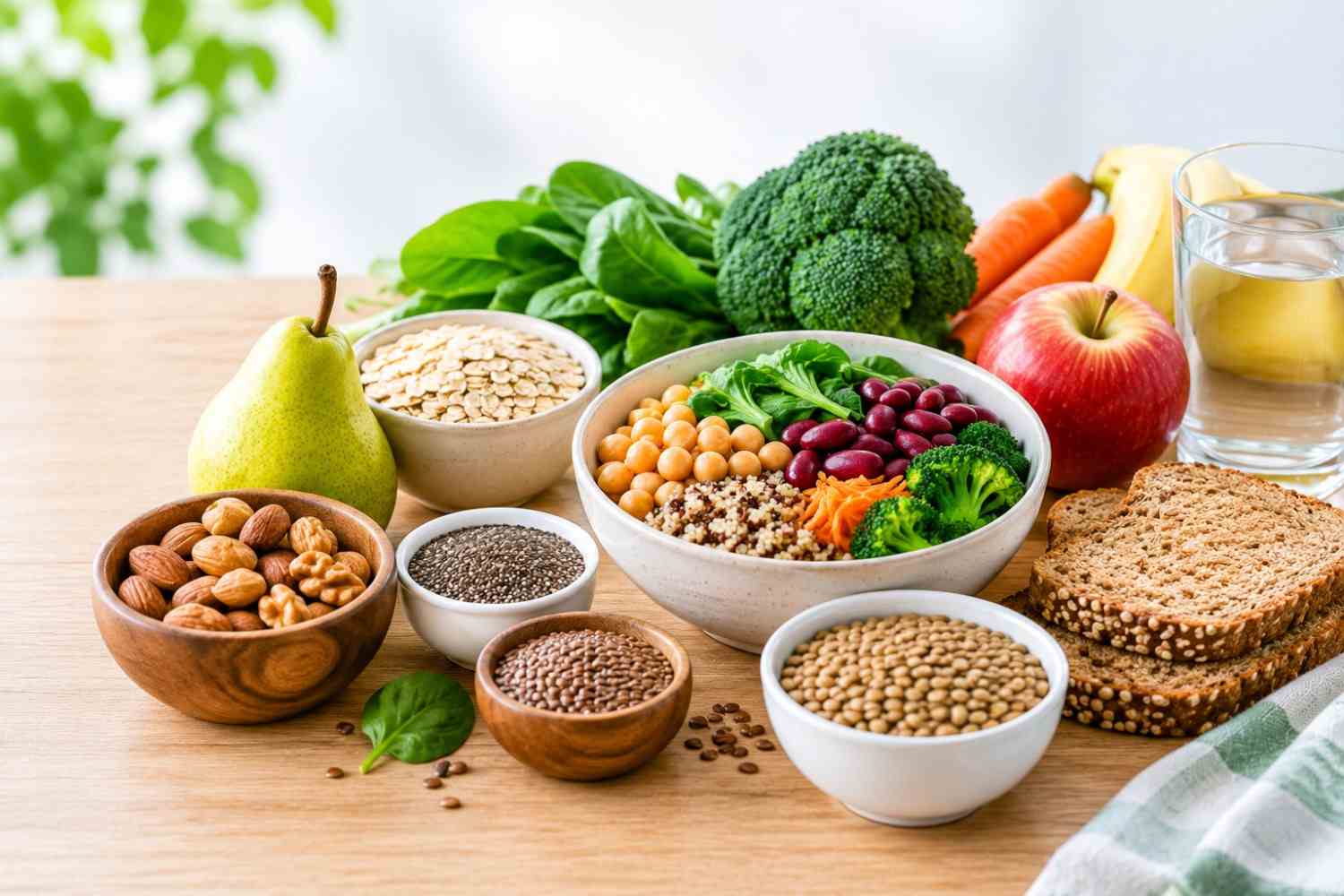
Fiber is an important part of a healthy diet, but many people do not get enough of it. Unlike carbohydrates, proteins, and fats, fiber is not fully digested by the body. It passes through the digestive system and supports healthy digestion.
So, how much fiber do you need per day?
For most adults, the recommended amount is roughly 21–38 grams of fiber per day, depending on age and sex. A commonly used guideline is about 14 grams of fiber for every 1,000 calories consumed.
Your exact needs can vary, so instead of focusing only on one number, it is useful to understand how fiber requirements change with age and life stage.
- How Much Fiber Do You Need Per Day?
- Why Does Your Body Need Fiber?
- What Foods Are High in Fiber?
- How Can You Get Enough Fiber Every Day?
- What Happens If You Suddenly Eat Too Much Fiber?
- Do You Need a Fiber Supplement?
- Is More Fiber Always Better?
- A Simple Way to Reach Your Daily Fiber Goal
- Frequently Asked Questions
- Final Thoughts
How Much Fiber Do You Need Per Day?
Here is a general guide for adults:
| Age and sex | Recommended fiber per day |
|---|---|
| Men 19–50 years | 38 g |
| Women 19–50 years | 25 g |
| Men 51+ years | 30 g |
| Women 51+ years | 21 g |
| Pregnancy | 28 g |
| Breastfeeding | 29 g |
These values are based on established dietary reference recommendations. Individual needs can vary depending on calorie intake and other factors.
For children and teenagers, fiber needs are different and increase as they grow.
Why Does Your Body Need Fiber?
Fiber does more than help with bowel movements.
A diet containing adequate fiber can:
- Support normal digestion
- Help prevent constipation
- Increase feelings of fullness
- Support healthy blood sugar management
- Help maintain healthy cholesterol levels
- Contribute to overall dietary quality
Fiber is naturally found in foods such as fruits, vegetables, whole grains, beans, peas, nuts, and seeds.
The best approach is usually to get fiber from a variety of whole or minimally processed foods rather than relying heavily on supplements.
What Foods Are High in Fiber?
You do not need special foods to increase your fiber intake. Many everyday foods are naturally rich in fiber.
Fruits
Good options include:
- Apples
- Pears
- Berries
- Bananas
- Oranges
- Figs
- Prunes
Whenever practical, eat whole fruit instead of drinking fruit juice because whole fruit provides more fiber.
Vegetables
Try adding:
- Broccoli
- Carrots
- Green peas
- Sweet potatoes
- Spinach
- Pumpkin
- Green beans
- Other leafy vegetables
Beans and Legumes
Beans and legumes can be particularly useful for increasing fiber.
Examples include:
- Lentils
- Chickpeas
- Kidney beans
- Black beans
- Peas
- Other pulses
They can easily be added to soups, salads, curries, rice dishes, and other meals.
Whole Grains
Choose whole-grain options such as:
- Oatmeal
- Brown rice
- Whole-wheat bread
- Whole-wheat pasta
- Barley
- Quinoa
- Popcorn
Whole grains generally contain more fiber than refined grains because the bran and germ have not been removed.
Nuts and Seeds
Nuts and seeds can also contribute fiber to your daily intake.
Try:
- Almonds
- Peanuts
- Chia seeds
- Flaxseeds
- Sunflower seeds
- Pumpkin seeds
How Can You Get Enough Fiber Every Day?
You don’t have to make major changes overnight.
A simple daily pattern might look like this:
Breakfast: Oatmeal with berries and chia seeds
Lunch: Whole-grain roti or bread with vegetables and lentils
Snack: An apple, pear, or handful of nuts
Dinner: Brown rice or whole-grain food with beans and vegetables
The exact foods are less important than creating a pattern that regularly includes fruits, vegetables, legumes, whole grains, nuts, and seeds.
What Happens If You Suddenly Eat Too Much Fiber?
Increasing fiber too quickly can cause:
- Gas
- Bloating
- Abdominal discomfort
- Cramps
This does not necessarily mean fiber is bad for you. Your digestive system may simply need time to adjust.
Increase fiber gradually and drink enough fluids. MedlinePlus also recommends increasing fiber slowly to reduce digestive discomfort.
For example, instead of suddenly adding 15–20 grams of fiber to your diet, add one or two high-fiber foods at a time.
Do You Need a Fiber Supplement?
Not necessarily.
For most people, it is preferable to build fiber intake around naturally fiber-rich foods. A balanced diet can provide fiber along with vitamins, minerals, and other beneficial nutrients.
A healthcare professional may recommend a fiber supplement in certain situations, such as when dietary changes alone are not enough for a particular digestive concern.
If you have a digestive condition or have been advised to follow a low-fiber diet, do not increase fiber significantly without professional guidance. Some conditions may require temporarily limiting fiber.
Is More Fiber Always Better?
No.
The goal is to get an appropriate amount consistently rather than consuming as much fiber as possible.
A sudden very high intake can cause digestive problems, especially if your current diet is low in fiber.
It is also important to remember that individual dietary needs can differ. People with certain digestive conditions may be advised to adjust their fiber intake.
A Simple Way to Reach Your Daily Fiber Goal
If you are not currently getting enough fiber, try these small changes:
- Add fruit to breakfast.
- Choose whole grains more often.
- Include beans or lentils in meals.
- Add vegetables to lunch and dinner.
- Keep nuts or seeds available as a snack.
- Increase fiber gradually.
- Drink enough fluids throughout the day.
Small changes made consistently can make it much easier to reach your daily target.
Frequently Asked Questions
How much fiber should an adult eat per day?
Most adults need around 21–38 grams per day, depending mainly on age and sex. Adults ages 19–50 generally need 25 grams for women and 38 grams for men.
Is 30 grams of fiber a day enough?
For many adults, 30 grams can be a reasonable amount. However, individual recommendations vary. Some adults need closer to 21–25 grams, while others need around 30–38 grams.
What is the easiest way to increase fiber?
Start by adding one or two fiber-rich foods to your existing meals. For example, choose oatmeal at breakfast, add lentils or beans to lunch, and include vegetables with dinner.
Can too much fiber cause constipation?
Increasing fiber very quickly, particularly without enough fluids, can cause bloating and may make constipation worse in some people. Increase fiber gradually and maintain adequate fluid intake.
Do fruits contain fiber?
Yes. Whole fruits such as apples, pears, berries, bananas, and oranges can contribute to your daily fiber intake.
Final Thoughts
How much fiber do you need per day? For most adults, the target falls somewhere between 21 and 38 grams, depending on age and sex.
Rather than trying to reach the number with a single food, spread your intake throughout the day. Fruits, vegetables, beans, lentils, whole grains, nuts, and seeds are simple ways to build a fiber-rich diet.
If your current intake is low, increase it gradually and give your digestive system time to adjust.
For more practical nutrition information, explore the HealthDiary24 Nutrition & Diet section and related healthy-eating resources.
Medical Disclaimer: This article is for general educational purposes and is not a substitute for personalized medical or dietary advice. If you have a digestive condition, persistent constipation, bowel symptoms, or have been advised to follow a specific diet, speak with a qualified healthcare professional or registered dietitian before making major dietary changes.