
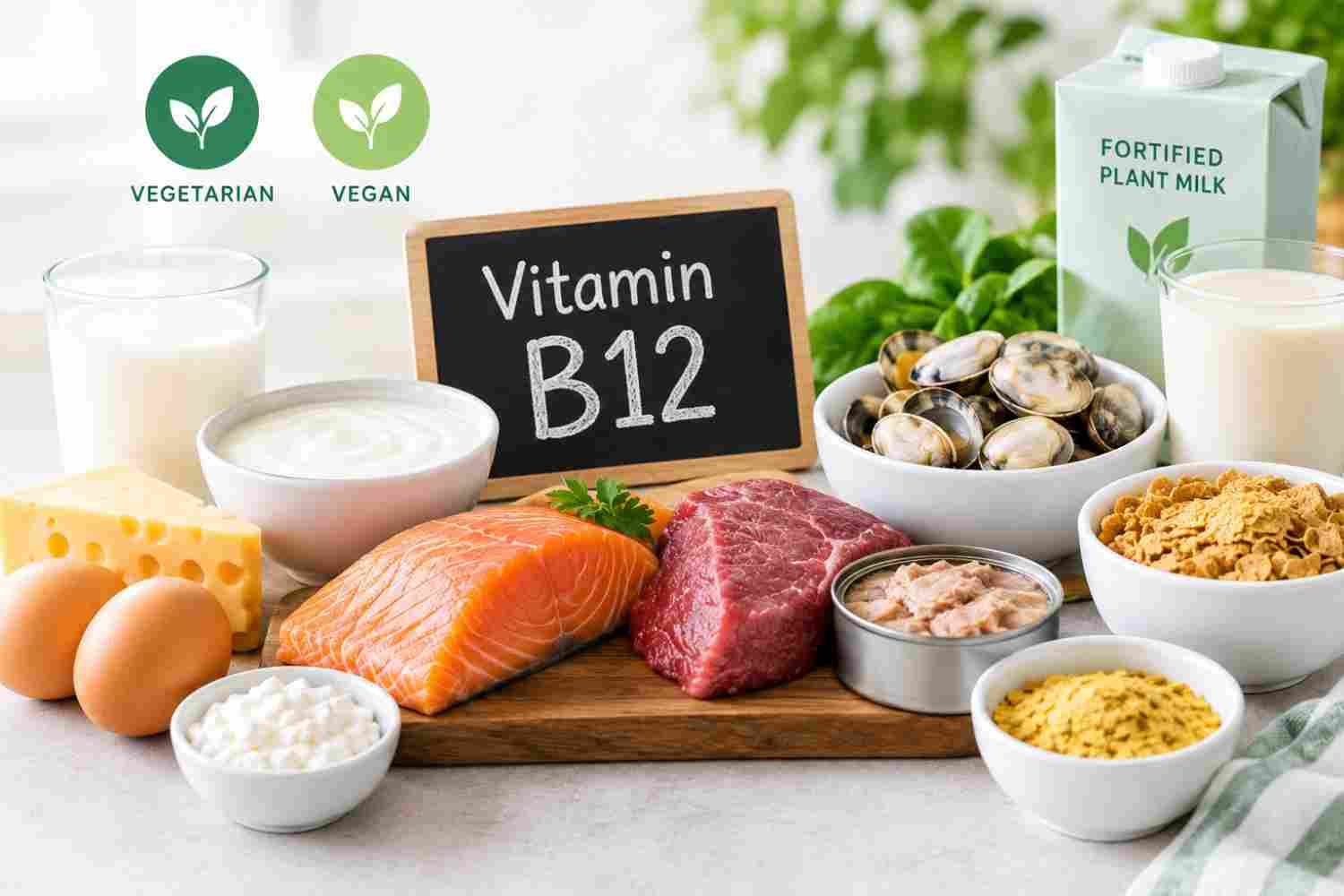
Following a vegetarian or vegan diet can be a healthy way to eat when meals are varied and properly planned. However, some nutrients require extra attention when animal foods are reduced or removed. Vitamin B12 is one of the most important.
Vitamin B12 helps maintain healthy red blood cells and nerve cells and is needed to make DNA. Because naturally occurring vitamin B12 is mainly found in animal-derived foods, people who eat little or no animal products need a reliable alternative source.
For vegetarians, eggs and dairy products can provide vitamin B12. Vegans, however, generally need to rely on B12-fortified foods and/or vitamin B12 supplements because ordinary plant foods do not naturally provide reliable amounts of active B12.
The good news is that getting enough B12 on a vegetarian or vegan diet is very achievable when you know what to look for.
- Why Is Vitamin B12 Important for Vegetarians and Vegans?
- Do Vegetarians Need Vitamin B12?
- Do Vegans Need Vitamin B12?
- Best Vitamin B12 Sources for Vegetarians
- Best Vitamin B12 Sources for Vegans
- How Much Vitamin B12 Do You Need?
- Can You Get Enough B12 From a Vegan Diet Without Supplements?
- How to Read Food Labels for Vitamin B12
- What About Spirulina, Seaweed and Fermented Foods?
- Should Vegans Take a Vitamin B12 Supplement?
- Vitamin B12 for Pregnant and Breastfeeding Vegans
- What Are the Signs of Vitamin B12 Deficiency?
- A Simple B12 Meal Plan for Vegetarians
- A Simple B12 Meal Plan for Vegans
- Vegetarian vs Vegan Vitamin B12 Sources
- Common Mistakes Vegetarians and Vegans Should Avoid
- How to Maintain Healthy B12 Levels Long Term
- Frequently Asked Questions
Why Is Vitamin B12 Important for Vegetarians and Vegans?
Vitamin B12 has several important functions in the body. It helps:
- Keep red blood cells healthy
- Support normal nerve function
- Make DNA
- Support normal cell metabolism
- Help prevent vitamin B12 deficiency anemia
A prolonged lack of B12 can cause anemia and neurological problems. Some symptoms can take a long time to appear because the body stores vitamin B12.
This is why simply feeling well does not always mean that your B12 intake is adequate.
People following vegan diets have a particularly important reason to plan their B12 intake because standard plant foods such as fruits, vegetables, grains, beans and nuts do not naturally contain reliable vitamin B12.
Do Vegetarians Need Vitamin B12?
Yes, but the answer depends on what type of vegetarian diet you follow.
A lacto-ovo vegetarian diet includes dairy products and eggs. These foods naturally contain vitamin B12 and can contribute to daily intake.
However, relying on very small amounts of dairy or eggs may not provide enough B12 for everyone.
For example, someone who eats eggs occasionally but rarely consumes dairy may still need to pay attention to fortified foods or supplements.
People following diets that exclude eggs and dairy have fewer natural dietary sources and should have a more deliberate B12 plan.
The NHS recommends that vegetarians who eat only small amounts of eggs or dairy, or avoid them altogether, make sure they have a reliable source of B12 through fortified foods or other suitable sources.
Do Vegans Need Vitamin B12?
For most people following a strict vegan diet, yes, vitamin B12 needs special attention.
A vegan diet excludes meat, fish, eggs, milk and other animal-derived foods. Since vitamin B12 is not naturally present in ordinary plant foods, vegans cannot depend on fruits, vegetables, legumes, grains, nuts or seeds for their B12 intake.
Instead, reliable options include:
- B12-fortified breakfast cereals
- B12-fortified plant milks
- B12-fortified nutritional yeast
- Other B12-fortified plant foods
- Vitamin B12 supplements
The important point is reliability. A food should not be considered a B12 source simply because it is plant-based or marketed as healthy.
Best Vitamin B12 Sources for Vegetarians
Vegetarians have more options than vegans because eggs and dairy foods can naturally provide B12.
1. Milk
Cow’s milk contains vitamin B12 and can be a convenient source for vegetarians.
Milk can be used with breakfast cereals, tea, coffee, smoothies or other meals.
If you use a plant-based milk instead, check whether it has been fortified with vitamin B12.
2. Yogurt
Yogurt can contribute vitamin B12 while also providing protein and other nutrients.
Choose plain or lower-sugar varieties when appropriate for your overall diet.
3. Cheese
Cheese contains vitamin B12, although the amount varies depending on the type and serving size.
It can be included in sandwiches, salads, wraps or cooked meals.
4. Eggs
Eggs provide vitamin B12 and can be included in a variety of vegetarian meals.
However, if eggs are only eaten occasionally, they may not be enough to provide a dependable B12 intake by themselves.
5. Fortified Foods
Vegetarians can also use foods fortified with vitamin B12, including some breakfast cereals, plant-based milks and nutritional yeast products.
Always check the nutrition label because fortification varies between products.
Best Vitamin B12 Sources for Vegans
For vegans, fortified foods and supplements are especially important.
1. Fortified Plant Milk
Some soy, oat, almond and other plant-based drinks are fortified with vitamin B12.
However, not every plant milk contains B12.
Before buying, check the nutrition label for:
Vitamin B12 / Cyanocobalamin / Methylcobalamin
The amount can vary significantly between brands.
2. Fortified Breakfast Cereals
Some breakfast cereals contain added vitamin B12.
They can be a convenient option, especially when combined with fortified plant milk.
Do not assume that every breakfast cereal contains B12. Check the label.
3. Fortified Nutritional Yeast
Nutritional yeast is popular in vegan cooking because of its savory, cheese-like flavor.
Some products are fortified with vitamin B12 and can be added to:
- Pasta
- Soups
- Salads
- Popcorn
- Rice
- Vegetables
- Plant-based sauces
The amount of B12 varies by product, so always check the nutrition label.
4. Fortified Plant-Based Foods
Some meat alternatives, dairy alternatives and other plant-based products may contain added vitamin B12.
Again, the key is fortification rather than simply choosing a food labeled “vegan.”
The NIH and NHS both identify fortified foods as useful sources of B12 for people who eat little or no animal foods.
How Much Vitamin B12 Do You Need?
The recommended daily amount depends on age and life stage.
According to the U.S. National Institutes of Health, the recommended amount for adults is 2.4 micrograms (mcg) per day. Requirements are higher during pregnancy and breastfeeding.
| Life stage | Recommended B12 per day |
|---|---|
| Adults 19+ | 2.4 mcg |
| Pregnancy | 2.6 mcg |
| Breastfeeding | 2.8 mcg |
| Teenagers 14–18 | 2.4 mcg |
| Children 9–13 | 1.8 mcg |
These figures are general recommendations and do not necessarily represent the amount that should be taken as a supplement.
A supplement may contain much more than the daily recommended amount because the body does not absorb all of the B12 in a supplement.
Can You Get Enough B12 From a Vegan Diet Without Supplements?
It depends on the foods you regularly eat.
A vegan diet based only on natural, unfortified plant foods is not a reliable way to obtain vitamin B12.
However, a well-planned vegan diet can provide adequate B12 through fortified foods and/or supplements.
For example, a vegan might regularly consume:
- Fortified plant milk
- Fortified breakfast cereal
- Fortified nutritional yeast
- Other foods containing added B12
Another person may prefer to use a B12 supplement as their primary reliable source.
The important thing is to have a consistent strategy rather than hoping that occasional fortified foods will provide enough.
How to Read Food Labels for Vitamin B12
Food labels are particularly important for vegetarians and vegans.
When purchasing plant-based products, look at the nutrition information and ingredient list.
Search for:
Vitamin B12
You may also see chemical forms such as:
- Cyanocobalamin
- Methylcobalamin
Check the amount per serving and consider how frequently you eat the product.
For example, if your favorite plant milk contains B12 but you only use it once a week, it may not contribute much to your overall weekly intake.
Also remember that not every vegan product is fortified with B12.
The NIH notes that vitamin B12 does not have to be listed on a food label when it occurs naturally in the food; labels are particularly useful for identifying B12 that has been added through fortification.
What About Spirulina, Seaweed and Fermented Foods?
You may see claims online that foods such as spirulina, algae, seaweed, fermented foods or certain mushrooms can provide vitamin B12.
These foods should not be relied upon as your main source of B12.
Some contain compounds that resemble B12 chemically, but these may not provide the biologically active vitamin B12 that your body needs.
For people following vegan diets, fortified foods and appropriate supplements are much more dependable options.
Should Vegans Take a Vitamin B12 Supplement?
Many vegans choose a B12 supplement because it provides a simple and reliable way to maintain intake.
The right supplement and dose can depend on your diet, age, health situation, medications and whether you already have a deficiency.
Some people may need treatment rather than a routine dietary supplement, particularly if blood tests show a deficiency or if their body has difficulty absorbing B12.
The NHS notes that people who have difficulty getting enough B12 through their diet, including some people following vegan diets, may need long-term B12 tablets.
It is best to discuss supplementation with a healthcare professional if you:
- Have symptoms of B12 deficiency
- Have previously had low B12
- Are pregnant or breastfeeding
- Have digestive or absorption problems
- Have had stomach or intestinal surgery
- Take medicines that may affect B12 absorption
- Have followed a vegan diet for a long time without a reliable B12 source
Vitamin B12 for Pregnant and Breastfeeding Vegans
Pregnancy and breastfeeding require extra nutritional attention.
The recommended B12 intake for pregnancy is 2.6 mcg per day, while breastfeeding requires 2.8 mcg per day according to NIH recommendations.
A pregnant or breastfeeding person following a vegan diet should make sure B12 intake is reliable rather than relying on chance sources.
Vitamin B12 deficiency in a mother can also affect an exclusively breastfed infant. NIH notes that infants of mothers who consume no animal products can have limited B12 reserves when maternal B12 status is low.
If you are pregnant, trying to conceive or breastfeeding while following a vegan diet, discuss your nutrition and supplement plan with your doctor or qualified dietitian.
What Are the Signs of Vitamin B12 Deficiency?
Vitamin B12 deficiency can develop gradually.
Possible symptoms include:
- Tiredness
- Weakness
- Pale skin
- Numbness or tingling
- Balance problems
- Memory or concentration changes
- Sore or swollen tongue
- Changes in mood
- Anemia
However, these symptoms can have many different causes.
If you are concerned about B12 deficiency, do not try to diagnose it based on symptoms alone. A healthcare professional can assess your symptoms and may recommend blood testing.
For a detailed explanation of deficiency symptoms, see our guide on Vitamin B12 Deficiency: Signs and Symptoms.
A Simple B12 Meal Plan for Vegetarians
A vegetarian B12-friendly day could look like this:
Breakfast
Fortified breakfast cereal with milk or B12-fortified plant milk.
Lunch
Vegetable and cheese sandwich with yogurt.
Snack
Boiled egg with fruit.
Dinner
Vegetable rice or pasta with cheese and a side of yogurt.
The actual B12 content will depend on the specific products and portion sizes.
A Simple B12 Meal Plan for Vegans
A vegan B12-friendly day could include:
Breakfast
Fortified breakfast cereal with B12-fortified soy or oat milk.
Lunch
Chickpea or lentil bowl with vegetables and fortified nutritional yeast.
Snack
A B12-fortified plant-based yogurt or other fortified food.
Dinner
Tofu or beans with vegetables, rice and a sauce containing fortified nutritional yeast.
A B12 supplement may also be part of the person’s regular nutrition plan.
The goal is not to eat one particular food every day. The goal is to establish a consistent and reliable B12 source.
Vegetarian vs Vegan Vitamin B12 Sources
| Source | Vegetarian | Vegan |
|---|---|---|
| Milk | Yes | No |
| Yogurt | Yes | No |
| Cheese | Yes | No |
| Eggs | Yes | No |
| Fortified plant milk | Usually | Yes |
| Fortified breakfast cereal | Yes | Yes |
| Fortified nutritional yeast | Yes | Yes |
| B12 supplement | Possible | Often useful |
| Meat and fish | No | No |
Always check product labels because fortification levels vary.
Common Mistakes Vegetarians and Vegans Should Avoid
Assuming All Plant Foods Contain B12
They do not. Ordinary fruits, vegetables, grains, nuts and legumes are not reliable natural sources of vitamin B12.
Relying Only on Occasional Fortified Foods
Eating a fortified product once in a while may not provide a dependable intake.
Assuming Every Plant Milk Is Fortified
Different brands have different formulations.
Ignoring Symptoms
Persistent fatigue, numbness, weakness or neurological changes should not simply be blamed on a vegan or vegetarian diet. They deserve proper medical evaluation.
Taking Random High-Dose Supplements
More is not always better. Your supplement choice should match your individual needs, particularly if you have a medical condition or confirmed deficiency.
How to Maintain Healthy B12 Levels Long Term
If you are vegetarian or vegan, make B12 part of your normal nutrition routine.
A simple approach is:
- Identify your main B12 sources.
- Check food labels regularly.
- Choose fortified products when appropriate.
- Consider a suitable B12 supplement if your diet does not reliably provide enough.
- Monitor your health and discuss testing with a healthcare professional when appropriate.
- Pay additional attention during pregnancy, breastfeeding and periods of major dietary change.
For more information about B12-rich foods, read Best Vitamin B12 Foods: A Complete Guide to B12-Rich Foods.
You can also learn more about why this nutrient matters in Vitamin B12: Why Your Body Needs It.
Frequently Asked Questions
Can vegans get vitamin B12 naturally from plants?
Most ordinary plant foods do not naturally provide reliable vitamin B12. Vegans should use fortified foods and/or supplements as dependable sources.
What is the best vitamin B12 source for vegans?
There is no single best food for everyone. Fortified nutritional yeast, fortified breakfast cereals, fortified plant milks and appropriate B12 supplements can all be useful options.
Do vegetarians need B12 supplements?
Not necessarily. Vegetarians who regularly consume sufficient dairy, eggs or fortified foods may obtain enough B12 from their diet. However, some people may still benefit from supplementation depending on their intake and individual circumstances.
Is nutritional yeast a good source of B12?
Fortified nutritional yeast can be a useful B12 source. However, not all nutritional yeast products contain vitamin B12, so check the label before relying on it.
Does spirulina contain vitamin B12?
Spirulina and similar products should not be considered dependable sources of biologically active vitamin B12.
How long can a person go without B12?
The body stores vitamin B12, so deficiency symptoms can take years to develop in some people. This does not mean that going without B12 is safe. A reliable dietary source is important, especially for people who avoid all animal products.
Can B12 deficiency be treated?
Yes. Treatment depends on the cause and severity of the deficiency. Some people are treated with oral B12, while others may need injections, particularly when absorption is impaired.
Final Thoughts
A vegetarian or vegan diet does not have to mean low vitamin B12. The key is understanding where B12 comes from and making sure you have a reliable source on a regular basis.
Vegetarians can obtain B12 from foods such as milk, yogurt, cheese and eggs, while vegans generally need to depend on fortified foods and/or supplements.
Instead of waiting for symptoms to appear, make B12 part of your regular nutrition planning. Read food labels, choose reliable fortified products and speak with a healthcare professional if you are concerned about your B12 status.
Medical Disclaimer: This article is for general educational purposes and is not a substitute for medical advice, diagnosis or treatment. If you have symptoms of vitamin B12 deficiency, are pregnant or breastfeeding, or have a condition that may affect nutrient absorption, speak with a qualified healthcare professional.
Also read: Best Vitamin B12 Foods: A Complete Guide to B12-Rich Foods