
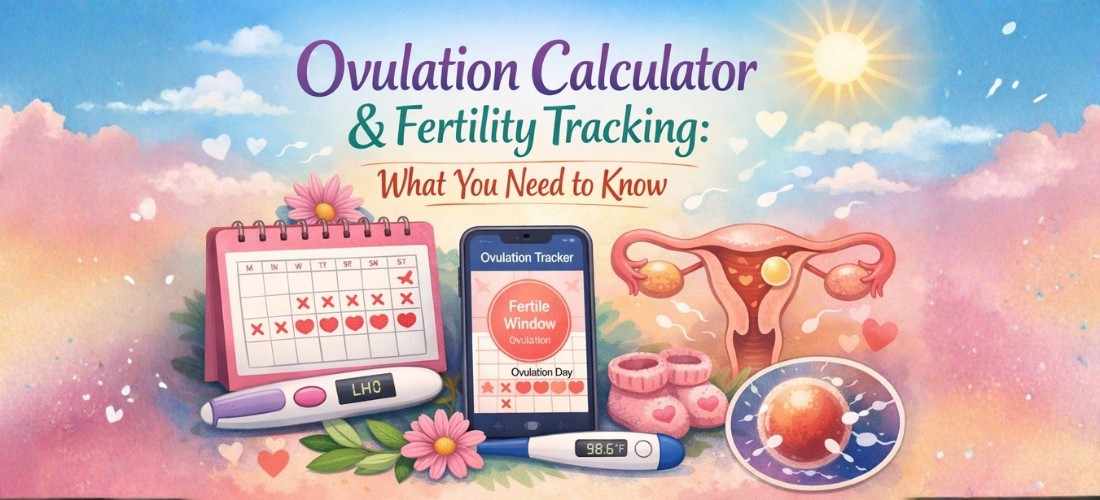
Understanding your cycle is essential when trying to conceive or simply monitor reproductive health. An Ovulation Calculator & Fertility Tracking system helps predict your fertile window, identify ovulation days, and improve your chances of pregnancy naturally. By tracking menstrual patterns, hormone changes, and physical symptoms, women can gain better control over their fertility journey.
In this guide, you’ll learn how ovulation calculators work, how to track fertility effectively, and what factors can influence your cycle.
- What Is Ovulation?
- How Does an Ovulation Calculator Work?
- What Is Fertility Tracking?
- Benefits of Using an Ovulation Calculator & Fertility Tracking1. Improves Conception Chances
- How to Track Ovulation Step-by-Step
- Factors That Affect Ovulation
- When Is the Best Time to Try for Pregnancy?
- Common Myths About Ovulation
- When to See a Doctor
- Tips to Support Healthy Ovulation
- Final Thoughts
What Is Ovulation?
Ovulation is the phase in your menstrual cycle when an ovary releases a mature egg. This usually happens once per cycle.
When Does Ovulation Occur?
In a typical 28-day cycle:
- Ovulation happens around Day 14
- The fertile window includes 5 days before ovulation and the ovulation day itself
However, cycle lengths vary, making Ovulation Calculator & Fertility Tracking tools helpful for personalized predictions.
How Does an Ovulation Calculator Work?
An ovulation calculator estimates your fertile days based on:
1. Menstrual Cycle Length
You input the first day of your last period and your average cycle length.
2. Ovulation Timing
Ovulation typically occurs 12–14 days before your next period.
3. Fertile Window Prediction
The calculator highlights your most fertile days for conception.
While useful, ovulation calculators provide estimates—not guarantees.
What Is Fertility Tracking?
Fertility tracking involves monitoring physical and hormonal changes throughout your cycle.
Common Fertility Tracking Methods
Basal Body Temperature (BBT)
- Slight temperature rise after ovulation
- Track daily before getting out of bed
Cervical Mucus Monitoring
- Clear, stretchy mucus signals ovulation
Ovulation Predictor Kits (OPKs)
- Detect LH surge before ovulation
Combining these methods with an Ovulation Calculator & Fertility Tracking approach increases accuracy.
Benefits of Using an Ovulation Calculator & Fertility Tracking1. Improves Conception Chances
Identifies peak fertile days.
2. Helps Understand Your Cycle
Reveals patterns and irregularities.
3. Assists in Natural Family Planning
Useful for both trying to conceive and avoiding pregnancy.
4. Detects Cycle Irregularities
Can highlight hormonal imbalances or health concerns.
How to Track Ovulation Step-by-Step
Step 1: Record Your Cycle
Track the first day of your period every month.
Step 2: Calculate Average Cycle Length
Subtract 14 days from your cycle length to estimate ovulation.
Step 3: Monitor Physical Signs
Watch for:
- Cervical mucus changes
- Mild pelvic pain (mittelschmerz)
- Increased libido
Step 4: Confirm with Tools
Use OPKs or fertility apps for better precision.
A consistent Ovulation Calculator & Fertility Tracking routine provides more reliable results over time.
Factors That Affect Ovulation
Not every cycle is perfectly predictable.
Common Influences
- Stress
- Poor sleep
- Hormonal imbalances
- Thyroid disorders
- Polycystic Ovary Syndrome (PCOS)
- Sudden weight changes
Tracking helps identify patterns linked to these factors.
When Is the Best Time to Try for Pregnancy?
Fertile Window Explained
The best time for intercourse is:
- 2–3 days before ovulation
- The day of ovulation
Sperm can live up to 5 days, while the egg survives about 12–24 hours.
Using Ovulation Calculator & Fertility Tracking increases the likelihood of timing intercourse correctly.
Common Myths About Ovulation
Myth 1: Ovulation Always Happens on Day 14
Not true—cycle length varies.
Myth 2: You Can Get Pregnant Any Day
Pregnancy is most likely during the fertile window.
Myth 3: Regular Period Means Perfect Ovulation
Some cycles may be anovulatory (no ovulation).
When to See a Doctor
Consult a healthcare professional if:
- You have irregular cycles
- You’ve tried conceiving for 12 months (or 6 months if over 35)
- You suspect hormonal issues
Medical evaluation can provide additional fertility insights.
Tips to Support Healthy Ovulation
Maintain a Balanced Diet
Include iron, zinc, and healthy fats.
Exercise Moderately
Avoid excessive training.
Manage Stress
Chronic stress can delay ovulation.
Sleep 7–9 Hours Daily
Supports hormonal balance.
Healthy lifestyle habits enhance Ovulation Calculator & Fertility Tracking effectiveness.
Final Thoughts
Using an Ovulation Calculator & Fertility Tracking system empowers you to understand your reproductive health better. While calculators provide helpful estimates, combining them with physical tracking methods offers the most reliable results. Whether you’re trying to conceive or simply learning about your cycle, consistent tracking gives you clarity, confidence, and control.
Understanding your body is the first step toward informed fertility decisions.